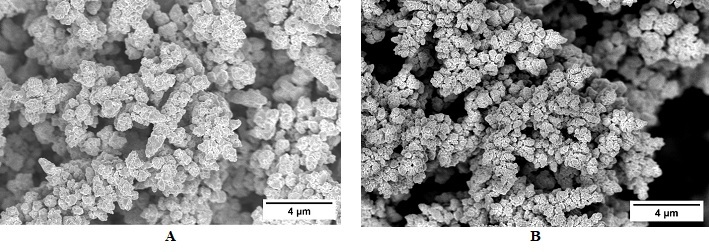
The high Faradaic efficiency and selectivity of Cu electrodes toward the formation of C₂+ products during CO₂ reduction have attracted considerable interest [1]. However, smooth polycrystalline Cu electrodes exhibit relatively low catalytic activity, underscoring the need for improved electrode models. Electrodeposition of copper under conditions where hydrogen evolution occurs leads to the formation of three-dimensional nanostructured Cu electrodes, commonly referred to as Cu foams. These materials are characterized by a high density of interconnected and isolated pores, resulting in a large real surface area. Owing to these features, such structures are widely employed in various applications, including CO₂ reduction.
When discussing the interrelation between catalyst structure and activity, both facet dependence and potential- and/or reaction-induced morphological and structural changes must be considered for a given electrocatalytic process. Because electrocatalytic properties strongly depend on surface structure, the reconstruction behavior of Cu metal plays a critical role in its CO₂ reduction performance [2]. Numerous studies have demonstrated that initially well-defined morphologies and highly active sites are often lost during electrocatalysis due to surface reconstruction, leading to a degradation in catalytic performance [3].
In order to investigate the stability of Cu foam structures in the process of electrochemical CO₂ reduction we have performed an ex-situ SEM, electrochemically active surface area measurements and Pb UPD analysis of Cu 3D electrodes before and after 2 hours of potentiostatic polarization in CO₂ saturated KHCO₃ solution. It was observed that Cu foam retains its dendritic morphology even after undergoing electrochemical CO₂ reduction, indicating structural stability and potential reusability of the catalyst.