Bee pollen is a natural product rich in carbohydrates, proteins, vitamins, fatty acids, and minerals, and is widely valued for its antioxidant and antimicrobial properties [1], [2]. These properties contribute to pollen quality and stability and may be influenced by processing and storage conditions. This study aimed to evaluate the stability of the antioxidant properties of bee pollen during four weeks of storage under various conditions, including differences in temperature, packaging material, pollen preparation (fresh or dried), and light exposure. Antioxidant activity was determined using spectrophotometric assays, including total phenolic content, flavonoid content, and free radical scavenging activity (DPPH) [3].
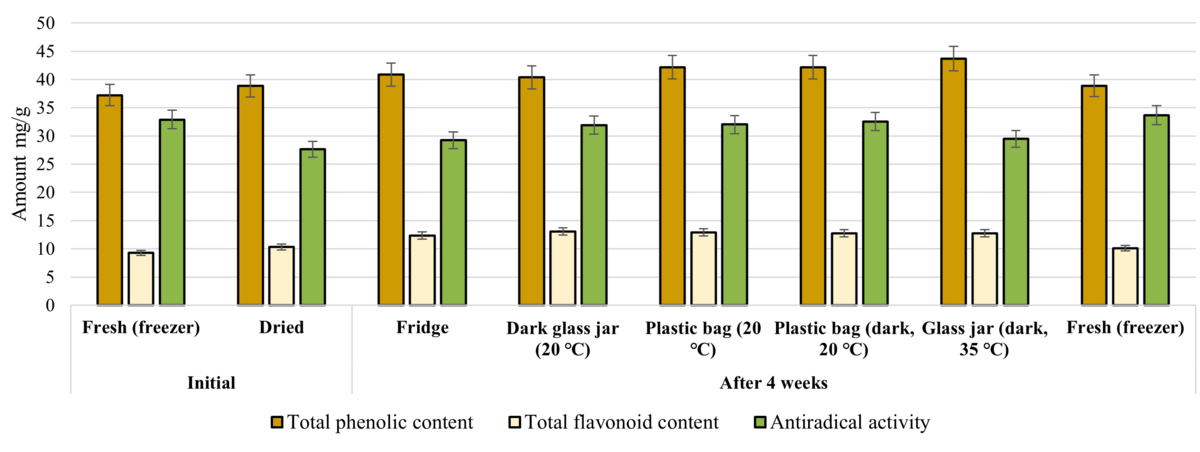
The effect of storage conditions on the antioxidant properties of fresh and dried bee pollen is shown in Figure 1. At the initial stage, dried pollen exhibited higher total phenolic and flavonoid contents as well as greater antiradical activity compared to fresh pollen, which can be attributed to concentration effects associated with moisture removal during drying.
After 4 weeks of storage, phenolics and flavonoid content remain stable in fresh pollen stored in the freezer, suggesting effective preservation of antioxidant properties under freezing conditions. While dried pollen samples showed slight variation depending on storage conditions, it is evident that storage had the highest impact on antiradical activity.
Further storage experiments are needed to clarify the long-term stability of these bioactive compounds under different environmental conditions. These results highlight the importance of optimized storage conditions to preserve the functional and sensory quality of bee-collected pollen.