
With the rise of industrial progress, pollution has been and remains a major concern for the world. Scientific advances have contributed to the solutions of the given issue by suggesting various ways of encountering and reprocessing; the relatively operative methods include the employment of microorganisms. Bacteria exhibit great diversity in their forms, properties, and activities. For this reason, the current study encompasses the isolation of microorganisms from hostile environments with a greater adaptability, along with their application in solving major ecological issues. To this end, LB agar medium was used effectively in the isolation and purification of strains until pure colonies were obtained, the latter being subsequently molecularly identified. 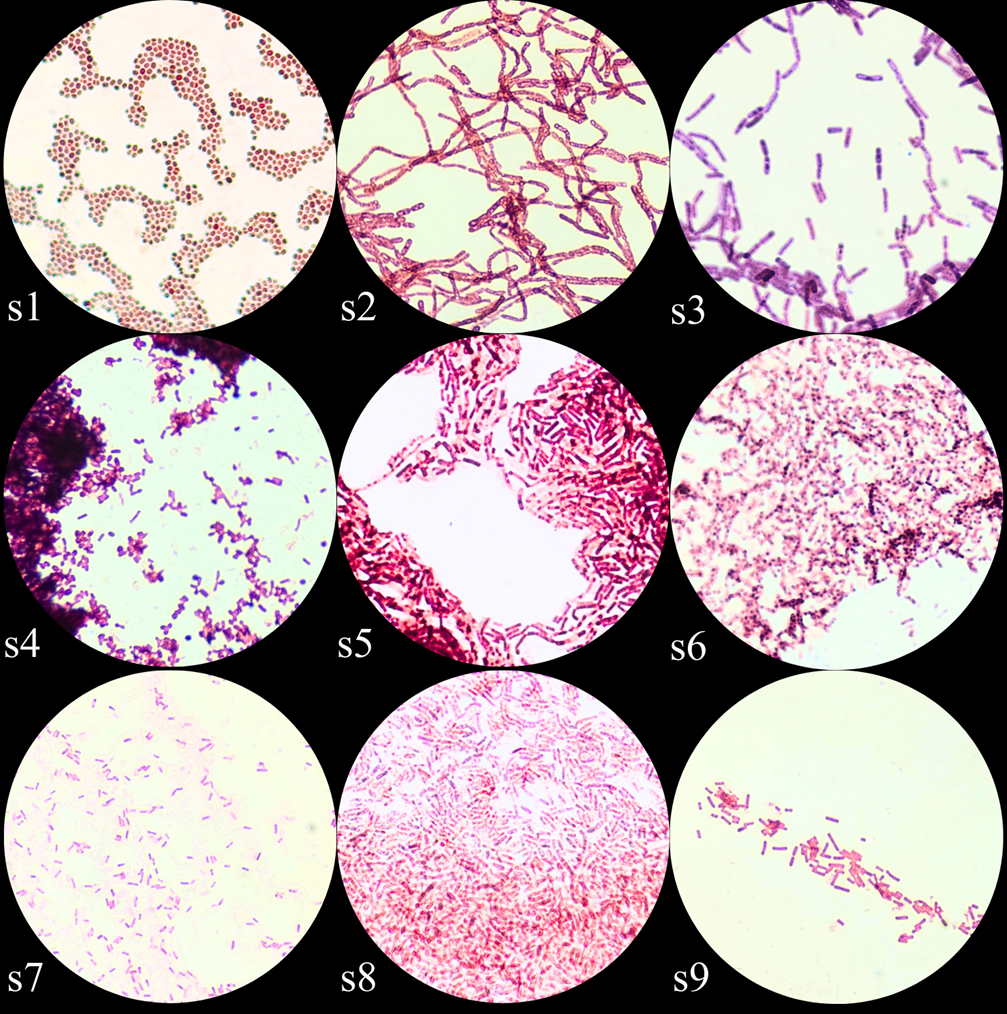
HARNESSING THE POTENTIAL OF BACTERIA ISOLATED FROM CONSTRUCTION BY-PRODUCTS AS A SUSTAINABLE APPROACH TOWARDS ENVIRONMENTAL PROTECTION
Sabina Myrzakhmetova1, Saloua Biyada1
1 Vilnius Gediminas Technical University, Faculty of Fundamental Sciences, Department of Chemistry and Bioengineering, Lithuania
Fig. 1. Gram staining of isolated bacteria