The use of luminescent lanthanide-doped materials is growing in all industries. Significant usage increase in technologies is associated with high thermal stability, refractive index and quantum yield, good photochemical stability, magnetic properties, low toxicity, and solubility in water [1]. Notable progress has been made in exploring the applications of luminescent lanthanide-doped materials in phosphors, lasers, optical devices, solar cells, catalysis, and bioimaging [2]. Nevertheless, lanthanide-doped materials have never been introduced as the potential wood dopants.
Due to high sustainability, thermal and electrical insulating properties, and aesthetics, wood is the most abundant building material used in residential and non-residential buildings, furniture constructions, and decoration. Thus, high weathering, biological and pyrolytic resistance of wood is essential [3, 4]. Mechanical, biological, thermal, and accelerated weathering behaviours of wood can be increased using various materials [5]. Therefore, this work proposes inorganic GdPO4·H2O:Eu compound produced by in situ hydrothermal syntheses as a new alternative method to increase wood chemical resistance and confer new optical properties.
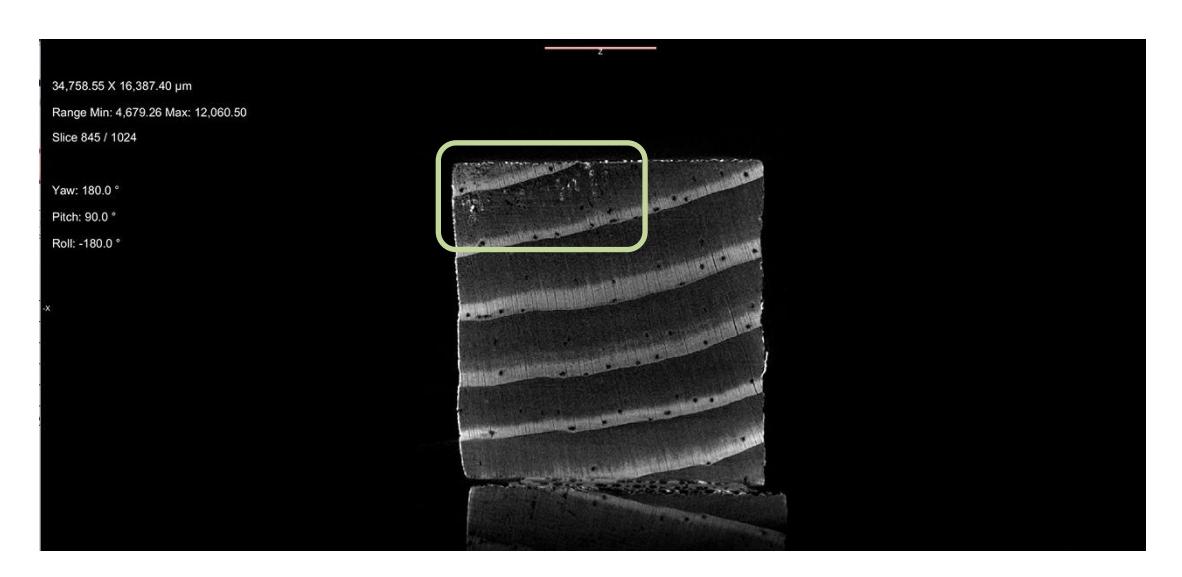
After in situ synthesis, the characteristics of the samples were observed by scanning electron microscopy (SEM) and computed tomography (CT) (Fig.1); optical properties were determined by luminescence analysis. Thermogravimetric (TG) analysis was performed to attest the effects of GdPO4 on the thermal degradation of wood.