
Phenolic acids comprise a class of phytochemical compounds that are well known for their anti-inflammatory, anti-oxidative, and anti-viral properties. Naturally occurring phenolic acids are found in plants and fungi and are utilized by various industries, including food, pharmaceutical, cosmetics, and chemical [1]. p-Coumarate (p-hydroxycinnamate) and ferulate (4-hydroxy-3-methoxycinnamate) are the most abundant hydroxycinnamates covalently bound to lignin and polysaccharides in the cell wall of plants. These phenolic acids are usually synthesized chemically or extracted from plant biomass using physicochemical methods. However, these approaches have disadvantages, including the requirement of large amounts of solvent, the low recovery yield, and the consequent high cost that limits widespread use [2, 3].
There is a particular global socioeconomic interest in the industrial use of phenolic acids obtained by bacterial lignin valorization. However, the utilization of lignin for phenolic acids production is restricted due to high cost and limited efficiency of enzymes required for the valorization of lignin. The application of cell-based strategies for improving enzyme and metabolic pathway characteristics provides multiple advantages and contributes to the robustness of the valorization. One of the most powerful tools for the development and screening of cell-based systems is transcription factor-based whole cell biosensor [4, 5]. Previous studies have shown that this type of biosensors is adaptable to the design–build–test–learn cycle and have been successfully applied for high-throughput systems screening, dynamic pathway control, and adaptive laboratory evolution [5, 6, 7].
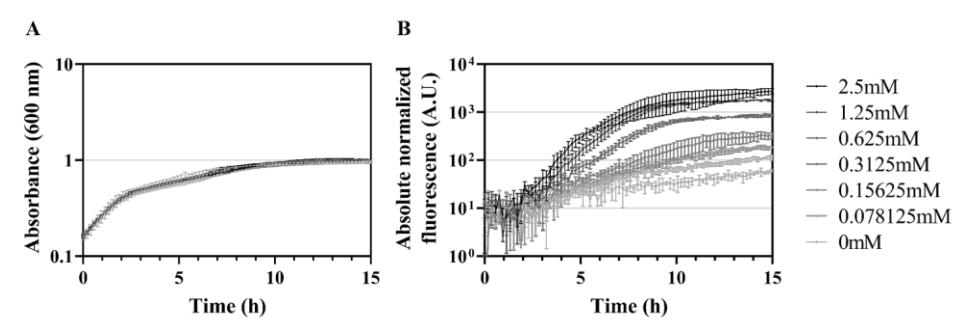
In this study, we identified and characterized p-coumarate and ferulate-inducible systems that can potentially be used for developing transcription factor-based biosensors. Our data show that inducible system from Pseudomonas putida KT2440 regulated by MarR transcription factor is specific to the p-coumarate and can be used to achieve up to 53-fold induction of gene expression using inducer concentration range from 0.078 to 2.5 mM (Fig. 1). Whereas the system from Acinetobacter baylyi, which is also regulated by MarR transcription factor, along with the systems from Bacillus sp. (B. megaterium, B. pumilus, and B. subtilis subsp. subtilis), which are regulated by PadR transcription factor, are non-specific and all are induced by p-coumarate and ferulate.