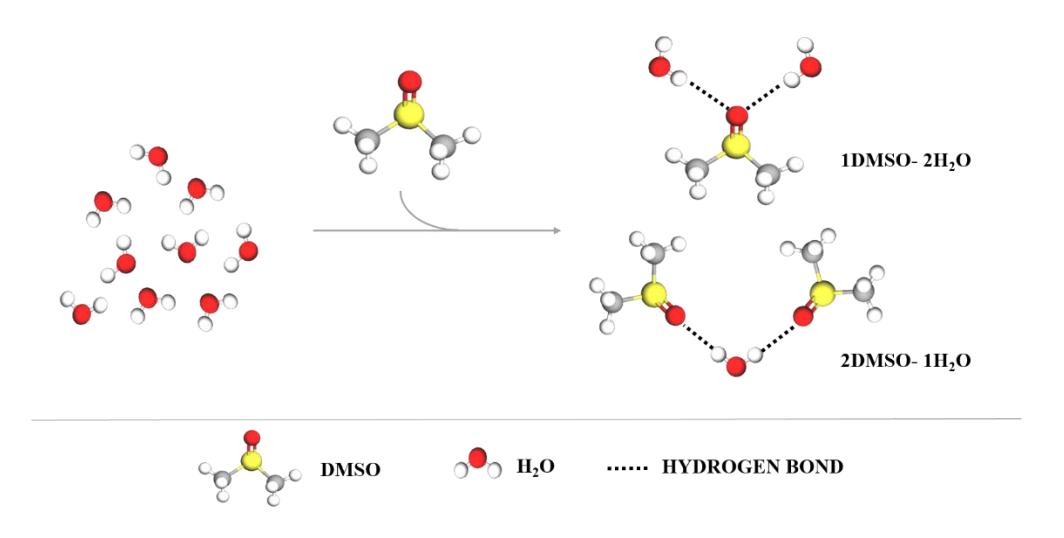
In the era of continuously rising demand for large-scale energy storage systems the scientific attention has shifted to safer and cheaper alternatives to Li-ion batteries – rechargeable aqueous batteries. [1] Na-ion aqueous batteries, despite their environmental benignity and compatibility with highly ionically conductive electrolytes, suffer from intrinsically narrow electrochemical stability window (1.23V) limited by both oxygen (OER) and hydrogen (HER) evolution reactions. [2] The latter raises a bigger challenge due to the hydrogen/anode material redox potentials overlapping and results in poor cycling stability. Several strategies have been established in attempt to suppress the undesirable effects of hydrogen evolution. One of them, increasing pH to shift the HER potential, might have a deteriorating effect on most of electrode active materials. [3] Another approach utilizes water-in-salt electrolytes which increase the aqueous electrolyte stability through forming an ion-conducting solid-electrolyte interphase and reducing the overall amount of free water on the electrode. [4] However, there is no reported satisfactory HER inhibition for common non-toxic and cheap salts (perchlorate, nitrate, acetate, sulfate and etc.) which increases battery price, hence, compromises perspectives of stationary applications. A more appealing way to eliminate the unbounded water is by introducing hybrid aqueous/nonaqueous electrolytes, where nonaqueous electrolyte is preferably represented by a highly polar aprotic solvent. [1] DMSO has been reported to prevent water decomposition in aqueous zinc batteries due to strong solvation structure alteration (Fig.1). [5]
The aim of this work is to investigate the effect of the electrolyte composition on HER potential and cycling stability of NaTi2(PO4)3 based anodes. The electrolytes were prepared by varying the salt, its concentration, aprotic solvent and its mole fraction in final electrolyte. The HER potential of prepared electrolytes was evaluated by cycling voltammetry (CV). The cycling stability of NaTi2(PO4)3 based anodes in those electrolytes was investigated by charge/discharge galvanostatic cycling in three-electrode bottom mount flat sample beaker cells.