The presentation is aimed at discussing the problem of water loss of alginate hydrogels. The current state of knowledge on hydrogel drying, as well as future, prospective research directions are indicated.
Alginate hydrogels consist of a three-dimensional network of polymer chains and water filling the space between the macromolecules. A characteristic feature of hydrogels is the ability to swell and retain a significant amount of water in their structure. Because of their biocompatibility, alginate hydrogels are used in the biomedical industry as bioinks in additive technologies, drug carriers, and tissue engineering [1-2].
Due to the high water content of hydrogels, they are exposed to water loss e.g., during storage or during the manufacturing elements in additive technologies. The loss of water affects the properties of hydrogels, which may result in limiting their potential applications.
Ongoing research is focusing mainly on analyzing the effects of alginate hydrogel additives such as other polymers to limit the effects of water loss [3-4].
The plan of own research includes the investigation of the influence of material additives (such as: gelatin and methylcellulose) and the conditions of storage of alginate hydrogels (increased humidity and reduced temperature) on the drying kinetics and mechanical properties of rehydrated after drying hydrogels. The mechanical properties of the specimens will be determined by a uniaxial tensile test.
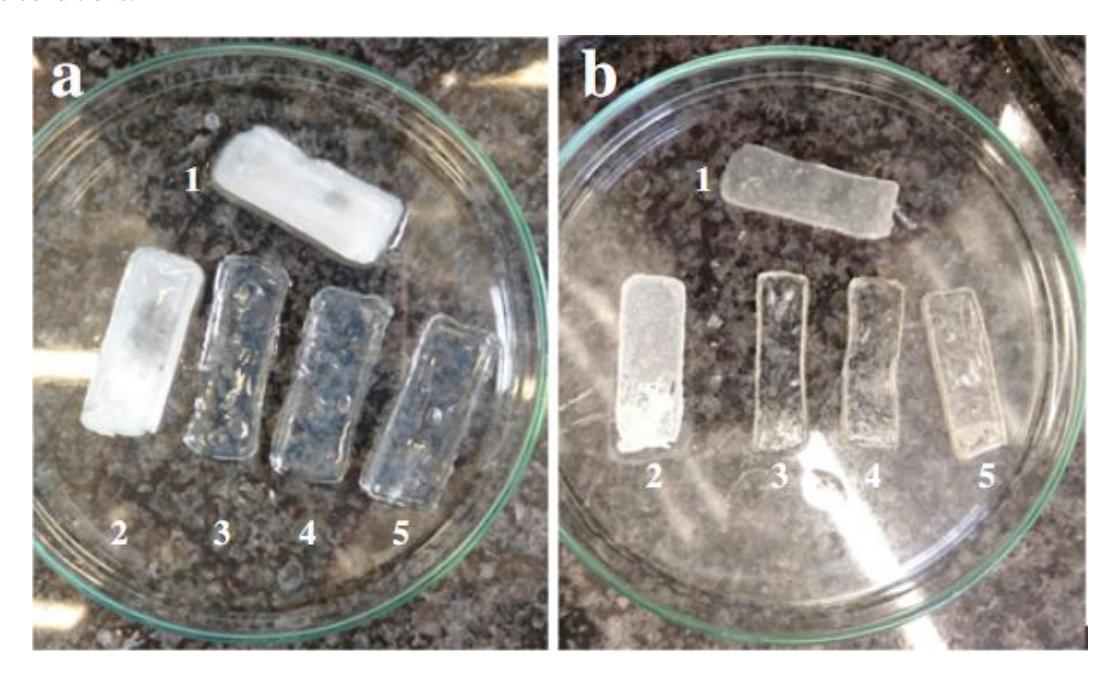
Preliminary studies included a qualitative assessment of alginate hydrogel shrinkage after 24 hours of storage at 4°C (results shown in Figure 1). The first group of alginate hydrogel was prepared by cross-linking sodium alginate with 0.5 M calcium chloride and the second included addition of hydroxymethylcellulose solution and was cross-linked in the same conditions.