Pyrethroids are pesticides with high insecticidal potential, however, they do not degrade immediately after spraying and their persistent use can affect non-target organisms and contaminate environment [1]. The biggest pollution is caused by the agricultural sector since it uses pyrethroids on a regular basis and it in turn pollutes terrestrial and aquatic environments. [2]. Pyrethroid residues such as permethrin, cypermethrin, deltamethrin and allethrin are detected in the soil, so the pyrethroid-contaminated environment needs to be remedied urgently. One of the potential solutions of cleaning pesticide-contaminated soil could be the use of microorganisms for the bioremediation. Microorganisms such as Bacillus sp., Catellibacterium sp., Serratia marcescens and Acidomonas sp. are reported to have the ability to break down ester-bond having pyrethroid pesticides residues such as cypermethrin, deltamethrin and allethrin [1,3], however, to date there is still a lack of research made in the area of effective microbiological decontamination of our environment from pyrethroids and their residues.
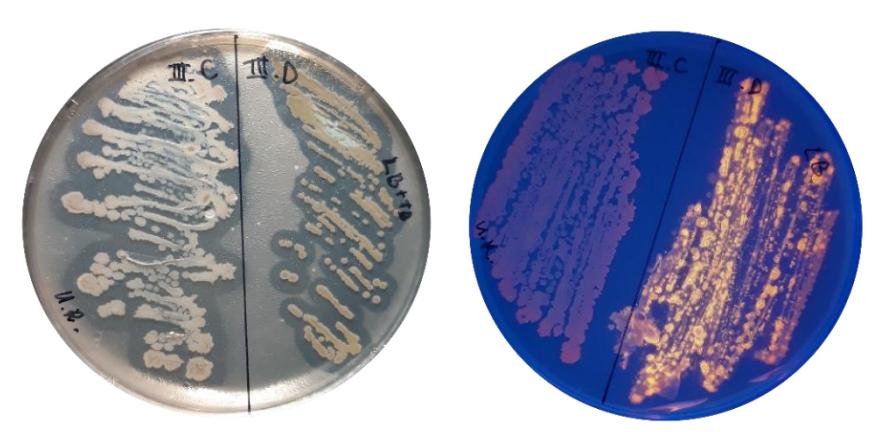
In this study we aimed to perform primary search, identification and analysis of microorganism and their enzymes that could have a potential to break down pyrethroids. To achieve the set goal, we performed screening of microorganisms isolated from the substrate used for the cultivation of agricultural products in some Lithuanian farms. Primary screening of microorganisms was performed on agar plates enriched with fatty substrates having ester-bond (tributyrin and rhodamine B with olive oil agar plates) (Fig. 1). Microbial isolates (bacteria, yeast and fungi) having high activity towards mentioned fatty substrates were subsequently selected to be identified by 16S rDNA analysis and for further analysis of the ability to break-down pyrethroids.