Aqueous Na-ion batteries offer one of the viable alternatives for conventional Li-ion batteries, especially when it comes to stationary energy storage. In this field the advantages of Li-ion technologies, such as high power/ energy density are of lesser concern, while the cost and operational safety are of a paramount importance. However, the absence of stable, high-voltage electrode materials remains one of the problems to be solved.
Mn-based materials are considered to be among the most suitable not only due to relative abundance and low cost, but also high voltage and multiple redox states, which could potentially yield high energy density [1]. With a general formula of Na3M2(PO4)3, NASICON-structured materials are exceptional due to their unique framework structure providing fast Na-ion transport and high stability. Despite a few successful reports in organic media, application of these materials in water-based systems is limited due to unfavourable aqueous chemistry [2,3].
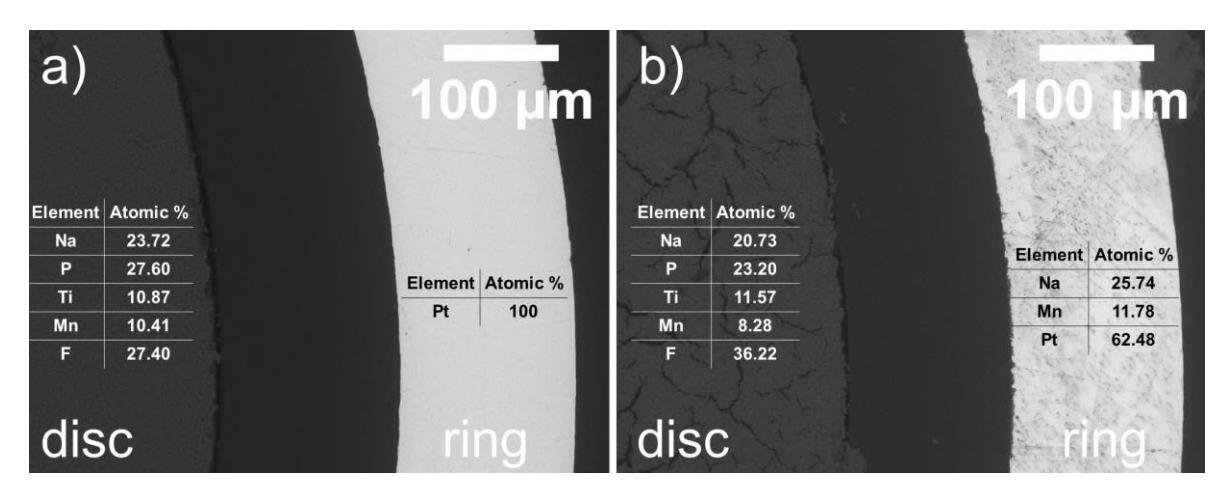
Here we report operational and degradation study of Na3MnTi(PO4)3 (NMTP), Na3MnPO4CO3 (NMCP) and Na4Mn3(PO4)2P2O7 (NMPP) in conventional, as well as rotating ring-disc (RRDE) electrochemical set-ups. The results show that the significant part of long-term electrochemical activity and capacity retention of Mn-based materials can be attributed to the formation of new Mn species resulting from the dissolution of original material, observed as a shift of operating potential in conventional cells. RRDE results show capacity fade of the cathode is related to electrochemical, as well as electrochemically-induced chemical dissolution of these materials. Results also indicate that significant amount of manganese is still present on the electrode, however, it becomes electrochemically inaccessible and does not contribute to charge capacity.