With the growth of lighting market there is an increasing interest in the smart-lighting control systems. Modern illumination systems based on light-emitting diodes (LEDs) together with modern ICT technologies overcome light control standards and even expectations of the customers. Therefore, simple and intuitive way to control sophisticated lighting systems is of high demand and no optimal solutions found yet.
The main goal of this work was to prepare and begin developing the autonomous stand-alone wireless smart luminaire control prototype, which could be operated without any expensive smart devices such as computers, smartphones or tablets. The following tasks were identified in order to achieve the goal:
1. Analyse the most popular wireless communication protocols and standards and choose the most suitable for the particular smart lighting application.
2. Develop the prototype of at least controller end unit and smart-lighting principal control algorithm.
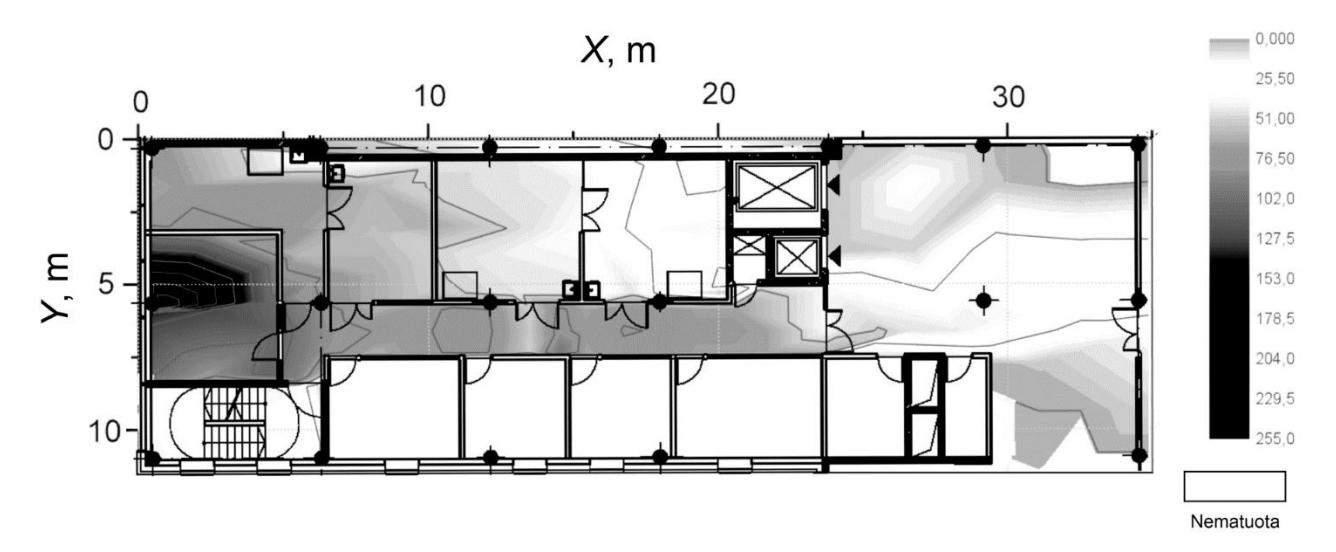
3. Investigate and characterize the wireless communication signal distribution map and suitability for particular application.
The control system of smart luminaire capable to change light intensity, correlated colour temperature and saturation/dulling ratio was set for development and investigation. Commercial wall dimmers were chosen as human interface devices for the simplest and most intuitive way of lighting control. The ZigBee RF4CE wireless communication protocol was chosen as the most suitable for smart lighting controls due to the promising efficiency, signal stability and ability to be powered from battery. Such system setup allows minimizing installation costs in renovated objects, where additional control wires are difficult to install.
The prototype controller endpoint of ZigBee communication was developed basing on ATSAMR21G18A microcontroller. The measurement of ZigBee RF4CE signal distribution map showed that reliable communication could be obtained within a single room if only integrated antennas used. Furthermore, it was noticed that ZigBee RF4CE signal do not penetrate through monolithic walls and reinforced concrete.