
Lanthanide-doped upconverting nanoparticles (UCNPs) have the ability to convert lower energy radiation (NIR) into visible radiation with higher energy via a nonlinear optical process [1]. UCNPs created numerous opportunities for therapy and diagnostics due to the integration of the advantages of its suitable dimensions as well as its special optical properties. For example, the NIR excitation light not only allows for deeper light penetration and reduced photodamage effects, but also offers lower autofluorescence, reduced light scattering, and phototoxicity. Thus, ideal for image-guided therapy through which the tumor located deep inside a body can be seen and treated simultaneously [2]. UCNPs unique optical and chemical properties, such as non-blinking, non-photobleaching, absence of autofluorescence, low-toxicity, and low photodamage to the living system further strengthens their use in medical diagnostics, therapy and imaging. These nanomaterials provide a multifunctional platform, which now is known as theranostics (Fig. 1). Theranostics is the key for next generation personalized medicine, as opposed to adopting a 'one size fits all' approach. This can move the field of nanomedicine forward to an era of more effective and individual treatment approaches [3].
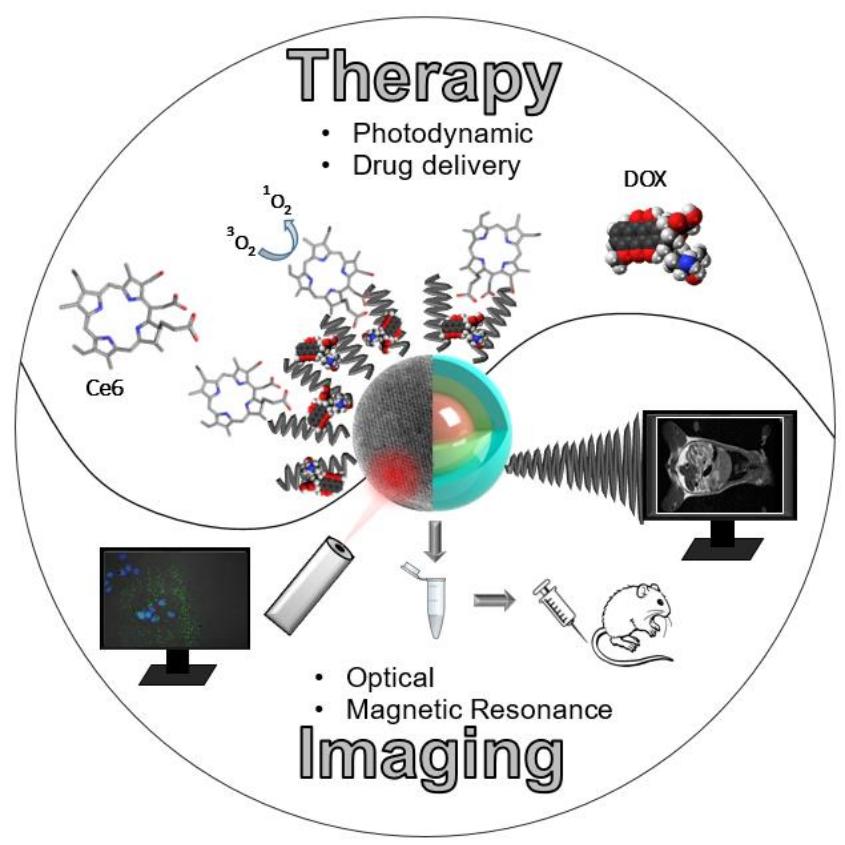
In this work, we present synthesis, properties and uses of our prepared sodium gadolinium fluoride core/shell upconverting nanoparticles. By changing dopant ions, shell composition and surface ligands of these nanoparticles, we can achieve different properties for numerous application. Smart design of multifunctional nanocomposite should represent one of the future directions in theranostics. Further studies are still needed to generate sufficient data for better understand of long-term toxicity and safety of the UCNPs before introducing their wide applicability in medicine.