Microbial fuel cells (MFC) are bio-electrochemical systems that drive a current by using microorganisms which convert the chemical signal contained in organic matter into electricity by means of enzymatic catalysis [1]. For practical application the anode should be highly conductive, have high catalytic activity, biocompatibility, chemical stability and resistance to decomposition [2]. By using whole organisms in MFC we allow various enzymes and hence multiple substrates to be used also providing optimal conditions for each enzyme.
MFC have drawn attention because it is a promising technology for bio-electrochemical power source as they can recover electrical energy from organic matter. However, the power output from such MFC is too low for practical applications, which is mainly due to the difficult electron transfer between microbial cells and the extracellular electrode [3]. Typically, electron transfer is the rate-limiting reaction step during MFC operation. Facilitating electron transfer from bacteria to the anode can fundamentally improve the overall performance by overcoming the kinetic losses. Modification with a conductive polymer can enhance the biocompatibility of the anode. Furthermore, conductive polymers can increase the charge transfer to the anode and this effect may be the main reason for the performance improvement. Recently the electrodes have been modified with conducting polymers such as polypyrrole (Ppy) [4], polyaniline (PANI), multiwall carbon nanotubes and others with incorporated cells to form new composite materials possessing the properties of each component for a synergistic effect.
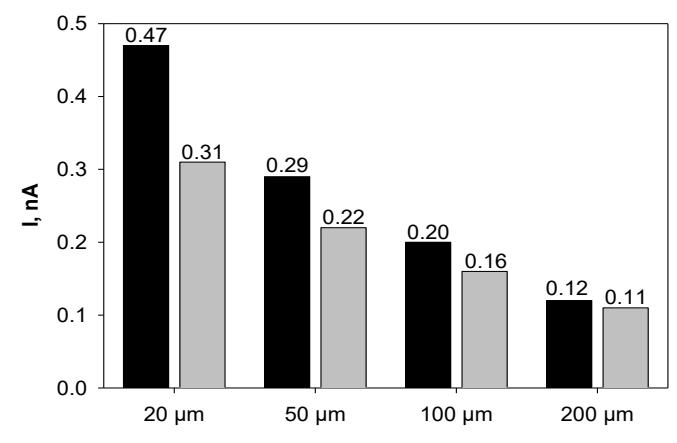
In our study we chose the conducting polymer Ppy, because it has been considered to have satisfying electric conductivity, stability, biocompatibility in mild conditions. We also chose a fungi strain Aspergillus niger which after modification was encapsulated with polypyrrole. To determine whether there was an electrochemical difference between the modified culture compared to the control group two electrochemical techniques were employed: Scanning electrochemical microscopy (SECM) and amperometric measurements for the evaluation in signal differences. Both methods showed several times enhanced signals for Ppy modified cells in comparison with the control group. This could be assigned to the better conductive cell wall or charge permeability. The improved electron transfer resulted in an increased sensitivity in biosensors which correlate to power density in microbial fuel cells because both are directly related to current density. This presents us that microorganism-assisted polypyrrole synthesis could be used for approaches in biosensor or microbial biofuel cell electrochemical systems.