
Medical conditions related to intervertebral disc (IVD) degeneration is a common disease in our society [1][2] and more in-depth investigations are needed to develop new and more effective treatment strategies. The aim of this study is to find possible links between age, sex and medical condition related changes in IVD and autofluorescence spectra of these samples. Thirty-seven specimens of this medical material were obtained in accordance with bioethical requirements. Its fluorescent properties were registered using 355nm excitation of laser (STA-01-TH, Standa Ltd.) and fiber-based optical system. The registered spectroscopic signals were preprocessed (Fig. 1) and analyzed by means of computational methods such as rank correlation as well as classificatory ROC (receiver operating characteristic) analyses. Two approaches to extract information from spectra were taken: (a) an at-every-wavelength based method in which comparisons were performed wavelength-wise and (b) a component-based method in which amount of similar spectroscopic information was reduced to so called components.
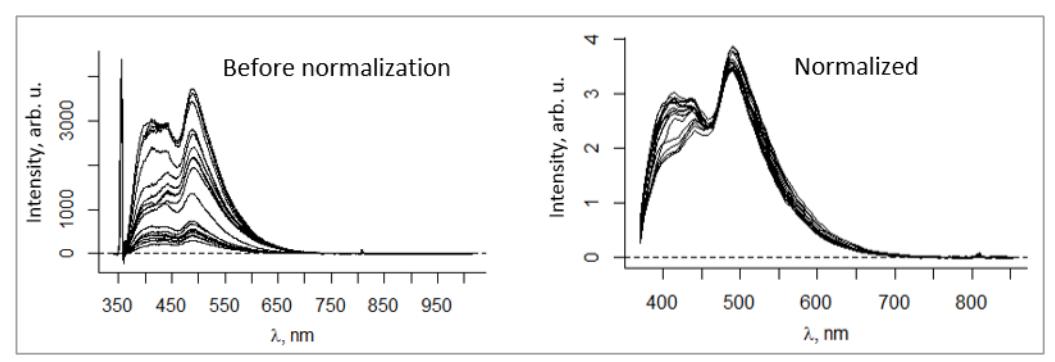
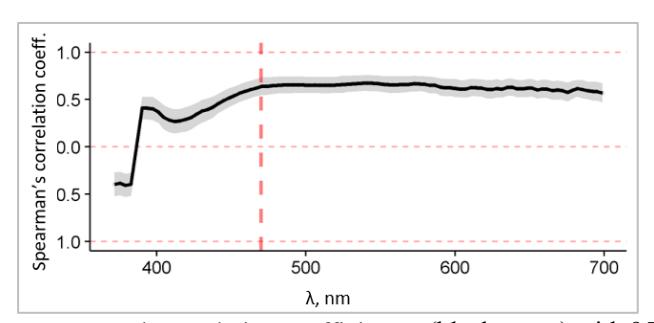
The results showed that method of normalization (in the stage of preprocessing) highly influences the accuracy of classification and value of correlation coefficient. Nevertheless, parameters of analysis algorithm that allow revealing correlation between age and spectroscopic properties (Fig. 2) were found. It was noticed that additional information, such as patient's age and gender, might lead to results that are more precise.
It can be concluded that autofluorescence spectra has information that may be valuable for medical diagnostics.