One of the most commonly employed implant materials in odontology is titanium or its alloys. Nonetheless, the surface of titanium is prone to mechanical abrasion. This is the consequence of increased surface roughness and easier facilitation of bacteria. In some scarce occasions this can be the cause of peri-implantitis [1]. In order to solve this problem, some surface modifications of titanium are necessary to enhance its abrasion resistance. Yttria-stabilized zirconia (YSZ) ceramics are already used in dentistry for dental crowns and partial fixed dental prostheses as it exhibits exceptional mechanical properties, chemical stability and biocompatibility as well as having esthetic properties [2]. Coatings of modified YSZ by calcium or magnesium ions might be a promising approach as the ions can improve the biocompatibility and possibly limit cracking of YSZ coatings.
The purpose of this research was to obtain monophase, uniform, crackless YSZ modified by calcium and magnesium ions coatings via sol-gel process for later studies in characterizing high biocompatibility and low bacterial activity.
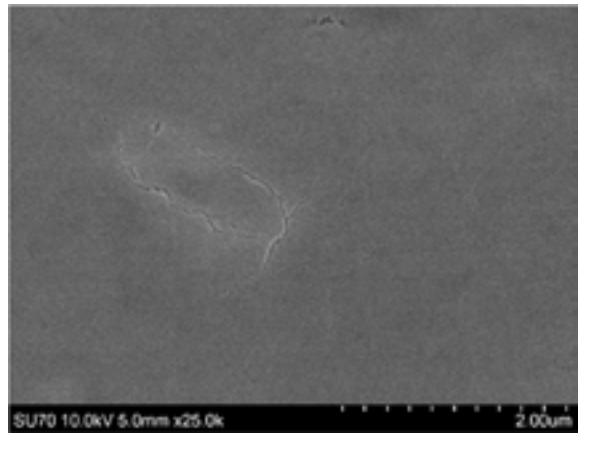
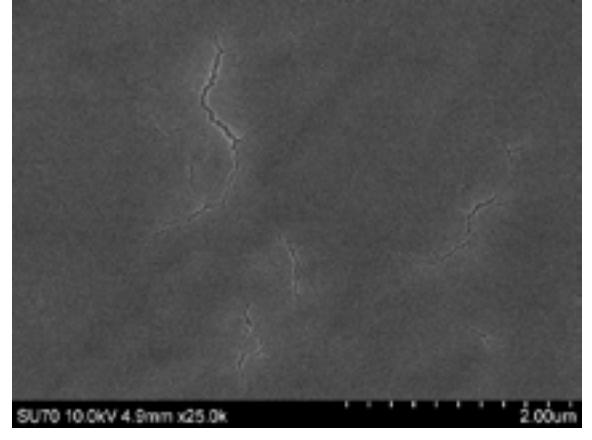
A stable YSZ-Ca and YSZ-Mg sols were prepared via alkoxide hydrolysis route [3]: yttrium nitrate was mixed with a) calcium nitrate tetrahydrate b) magnesium nitrate hexahydrate, diluted, acetylacetone diluted in isopropanol was added as a chelating agent, water was added as hydrolysis agent, finally adding zirconium propoxide. Sols having concentration of $Ca^{2+}$ or $Mg^{2+}$ ion of 1%, 4%, 7%, 10%, 15% and 20% were tried to be synthesized. The concentration of modified YSZ in isopropanol for homogenous coatings was set to 5%. Afterwards, sols that had chemical stability and stable tetragonal YSZ phase were coated on titanium substrate by spin-coating method. X-Ray Diffraction (XRD) was used to characterize the YSZ phase by analyzing powder, which was obtained by heating the sol, which was in turn heated at 650 °C for 4 hours and grinded for homogeneity of the sample. Coatings were annealed at 650 °C for one hour to obtain homogenous monophase coatings (the heating temperature was set in accord to TGA analysis data). The coatings were characterized by scanning electron microscopy (SEM). The annealed coatings showed cracked surfaces in both Y0,06 Zr0,93 Ca0,01 O1,96 (figure 1) and Y0,06 Zr0,93 Mg0,01 O1,96 (figure 2) systems.