
Nanoparticles are emerging as a promising class of therapeutics for cancer. Clinical results suggest that therapeutics based on nanoparticles can show enhanced efficacy, while simultaneously reducing side effects arising from its properties, such as more targeted localization in tumours.
The aim of the project is to obtain peptides-capped nanoparticles, which act as an intracellular delivery of anticancer agents to tumor tissues. There are many publications, which indicate glutathione-stabilized gold nanoparticles, making them properly examined. Glutathione-stabilized gold nanoparticles synthesis distinguish from its stability. Moreover glutathione occurs in human body. It is needed to transform reactive oxygen species into harmless form, what stands out for good assimilability of glutathione-stabilized gold nanoparticles. Furthermore, glutathione has an amino group (-NH2), a thiol group (-SH) and carboxyl groups (-COOH), which set it as a perfect component to assemble with the therapeutic entities.
The synthesis features use of yeast extract instead of pure glutathione. Yeast extract contains from 5 up to 7% of glutathione, what gives the opportunity to optimize synthesis and make it more economical and eco-friendly. Usage of gold nanoparticles also provides entire removability from the organism[1].
Results show that changing parameters of the synthesis, such as reducing quantity of yeast extract or using buffer solutions influence on physical and chemical properties of gold nanoparticles.
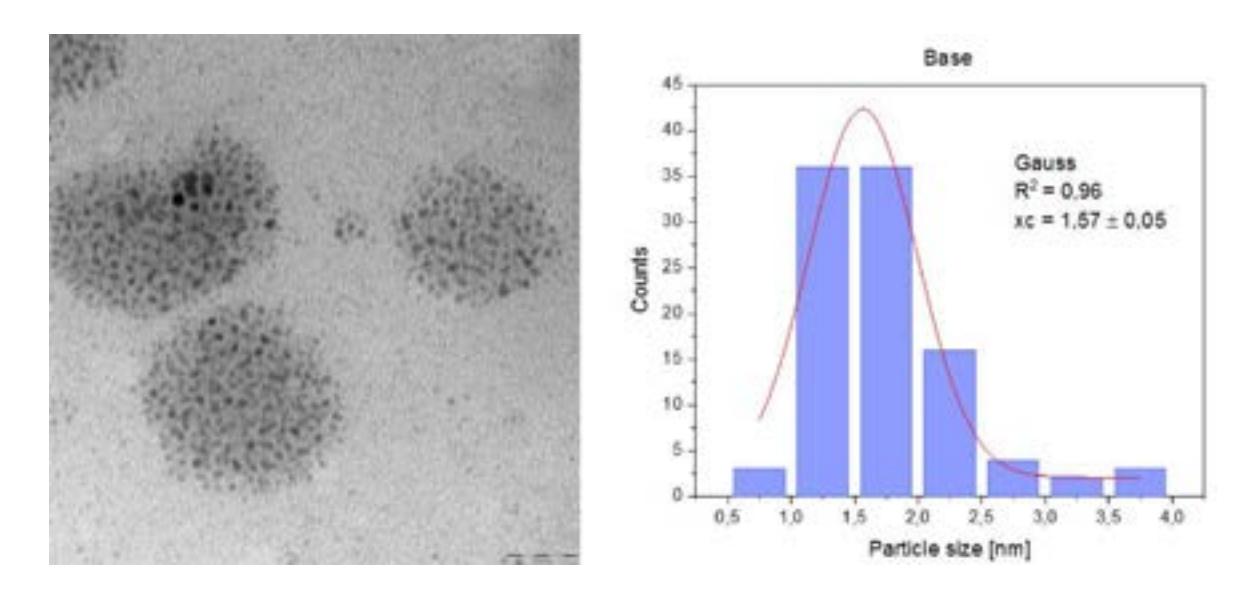
Received nanoparticles have been characterized by SAXS, TEM, and UV-Vis analysis. In the future, further analyzation with SEM and MTT assay is planned.