In recent years plasmonic nanostructures have attracted a lot of attention allowing studies on enhanced light-matter interactions. Those are manifested in subwavelength light confinement and electromagnetic field enhancement, both associated with excitation of surface plasmons (SP). This opened up new applications including subdiffraction imaging, plasmon-enhanced photovoltaics and plasmonic sensing[1-2]. In case of the nanosensors, electromagnetic field localization in the vicinity of nanoobjects leads to high sensitivity to surface binding events and high resolution reaching up the single molecule detection capabilities[3]. Various designs have been used, such as nanohemispheres, nanorods[4] and nanohelices[5]. Silver nanoparticle (nAg) nanohelices are especially suitable because of their chiroptical properties and relatively high resonance quality factors with low losses at optical frequencies.
Performance of a SP-based biosensor depends on the quality factor of surface plasmon resonance (SPR) which in turn requires well-defined nanostructures achievable mostly by expensive and inefficient techniques like electron-beam or focused ion-beam lithography. Those commonly used nanotechnological tools allow for an up to nanometer resolution, but they tend to be time-consuming and limited to a micrometer-scale operation area.
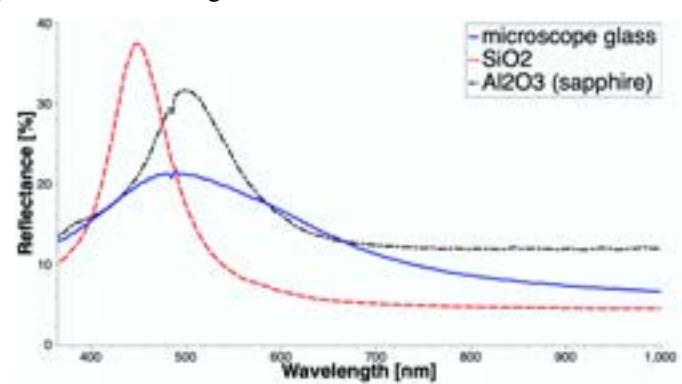
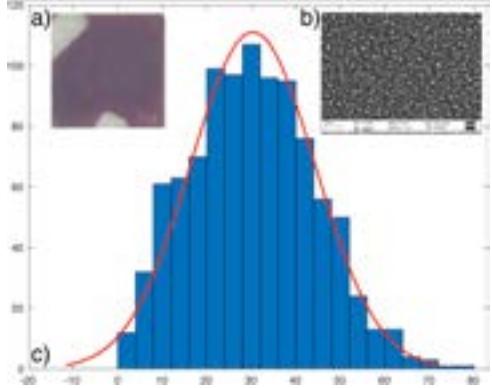
In this study our focus is to master the manufacturing process of large-area metallic nanostructures in form of nanoparticles, nanopillars and nanohelices by means of Physical Vapor Deposition (PVD) technique combined with thermal annealing. In order to achieve anisotropic nanoparticles, Glancing Angle Deposition approach is used. To optimize the nanostructures and quality factor of SPR we systematically characterized several fabrication conditions including the type of substrate, the temperature and time of annealing and the rate and angle of deposition. Prepared samples are measured using UV-VIS reflectometry, spectrophotometry and scanning electron microscopy. Sensitivity of the final products is investigated using salt solutions at different concentrations. This whole procedure makes it possible to prepare uniform, a few centimeter square substrates of different plasmonic responses (Fig. 1-2) which can be controlled by adjusting only a handful of settings.