
Nanotechnology has recently become one of the most exciting forefront fields in analytical chemistry and now is rapidly evolving to open new combination of electrochemical biosensors constructions and methods, resolve challenging bioanalytical problems, including specificity, stability and sensitivity [1,2]. Biosensors with immobilized enzymes and gold compounds are characterized by highly selectivity, sensitivity, rapidity, reversibility, reproducibility, practical application and excellent catalytic activities [3,4]. Characterized important properties, such as electrical conductivity, nonlinear optical and luminiscence properties, versatility conducting polymers are used as information storage materials and chemical sensors [5,6,7].
The main aim of this research was to create glucose biosensors using electrochemically synthesized gold nanostructures, immobilized by glucose oxidase and modified by polyaniline and/or polypyrrole on the surface of carbon rod electrode. Electrochemically synthesized gold nanostructures in a combination with enzyme offered some advantages for the design of electrochemical biosensors. The gold compounds facilitated indirect electron transfer, via phenazine methosulfate as the redox mediator and showed the positive effect on the electrochemical signals of glucose oxidase-based electrodes. It was chosen the optimal conditions of electrochemically synthesis and concentration of gold nanostructures, medium of analyze, registration's method, conditions of enzymatic polymerization to achieve the highest current responses of glucose. It was evaluated the sensitivity of determination, analytical characteristics and stability of created analytical system. Obtained results were compared with modified by polymer biosensor immobilized only by enzyme. The research of electrochemical glucose biosensor based on gold nanostructures and polypyrrole was characterized by high sensitivity, good reproducibility (9.83 %), lower detection of limit (0.07 mmol L-1) and great application in real objects.
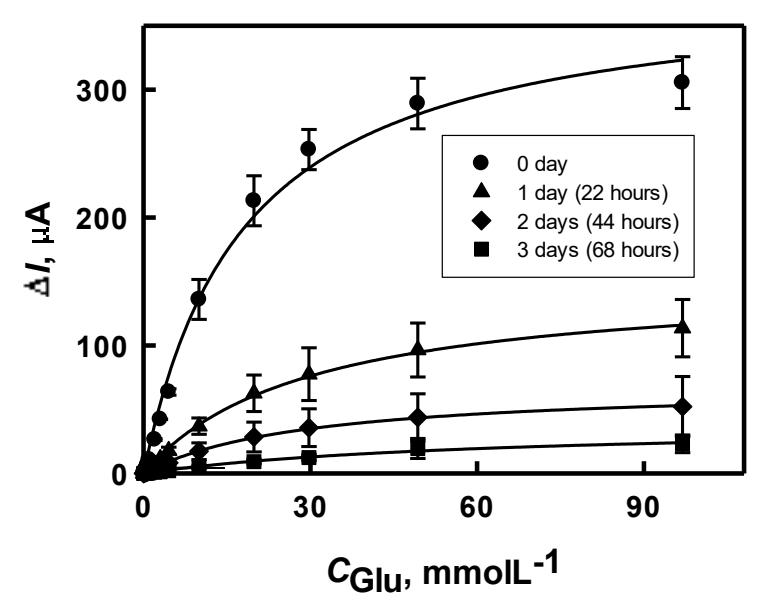
Furthermore, the higher sensitivity of the biosensors also offers the possibility of using ultramicroelectrode designing for in vivo measurements.