Capillary electrophoresis is powerful technique for separating chemical compounds in aqueous solutions. Capillary electrophoresis method is capable of effectively separating such chemicals as inorganic compounds, amino acids, vitamins, organic acids and proteins. The aim of this study is to adapt capillary electrophoresis analysis conditions for effective analysis of polycyclic aromatic hydrocarbons degrading enzymes produce by white root fungi. This study consists of two major parts. First part of the study is optimization of enzyme extraction method from white root fungi. Second part is optimization of capillary electrophoresis analysis conditions for effective separation.
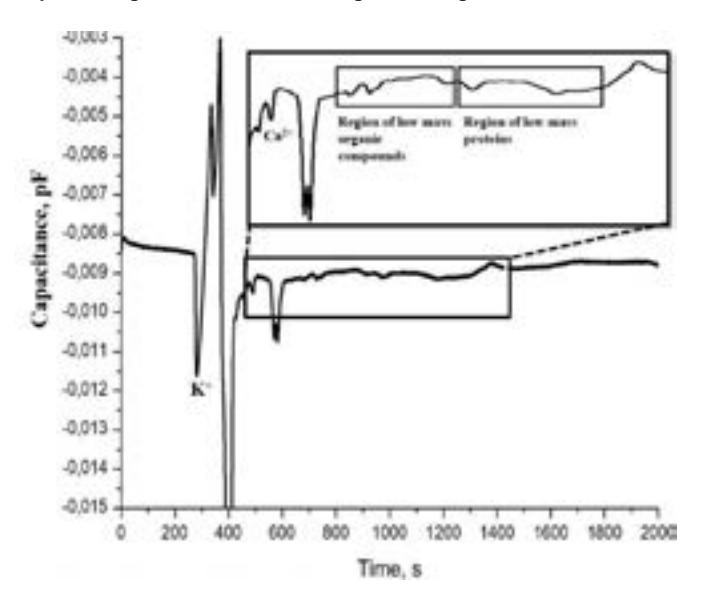
First part is enzyme extraction. It was decided to start experiments with most simple extration solution – bidistilated water. Samples were prepared using 10 ml of bidistilated water as extraction solvent. Extration was conducted in ultrasonic bath for 1 hour. Second part is analysis of extracts using capillary zone electrophoresis method, analysis results are show in Fig 1.
Analysis conditions were: 0.5 M acetic acids was used as background electrolyte, 50 μm inner diameter fussed silica capillary (total length - 59 cm, length to the detector – 49 cm), sample injection – hydrodynamic 50 mbar * 30 s, analysis voltage 14 kV, analysis time - 35 minutes, detector type – contactless conductivity detector. Analysis results show promising trends for capillary electrophoresis as effective protein separation method.