
The integration of nanotechnology with biology and electrochemistry produce major advantages in the field of electrochemical sensors. Nanotechnology is rapidly evolving to open new materials (nanoparticles, nanostructures) to solve bioanalytical problems, including specificity, stability and sensitivity [1,2]. Last decades biosensors have found promising applications in biotechnology, diagnostic technology, food and agriculture product processing, clinical analysis, medicine and pollution monitoring [2,3,4]. Main request for electrochemical biosensors are rapidity, simplicity to operate, long-term stability, miniaturization, elimination of oxygen dependency, high selectivity and sensitivity, easy fabrication and easy in application, the suitability to use in turbid media [3,4,5]. Conducting polymers improve the key performance characteristics of glucose sensors and are used to enhance rapidity, sensitivity and versatility of biosensors in diagnostics of analytes [3,6].
The main aim of this research was to evaluate the influence of polyaniline and polypyrrole on the sensitivity of glucose biosensors based on electrochemically synthesized gold nanostructures and immobilized insoluble mediator and glucose oxidase on carbon rod electrode. Gold nanostructures in a combination with glucose oxidase offered some advantages for the design of electrochemical biosensors. Gold compounds have got influence on the electrochemical signals of glucose oxidase and 1,10-phenanthroline-5,6 dione based electrodes. The optimal polymer, conditions of enzymatic polymerization were chosen to achieve the highest current responses of glucose. It was evaluated the sensitivity of determination, analytical characteristics and stability of glucose biosensor modified by pyrrole.
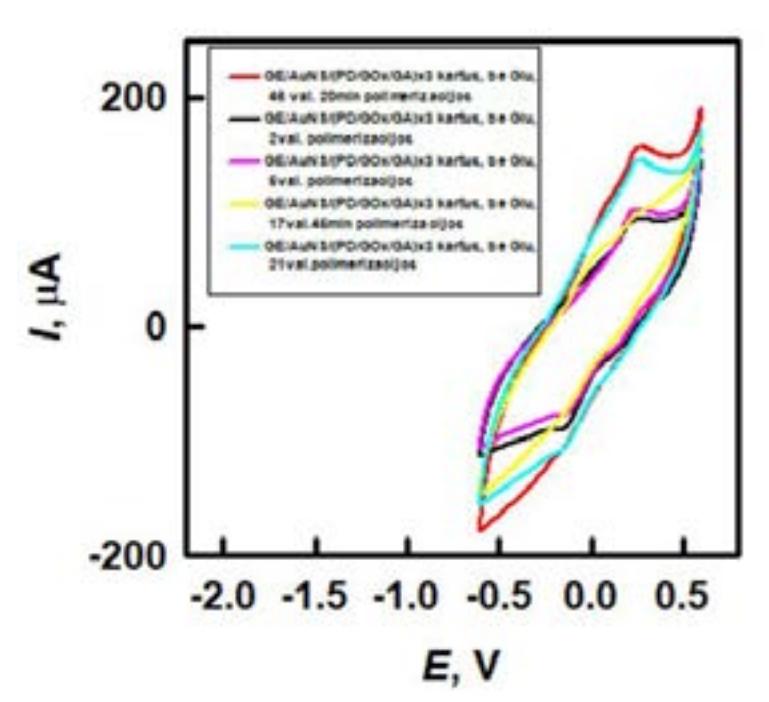
Gold nanostructures could be apply as novel transducer in the design of electrochemical glucose biosensors and could be important in most diagnostic and biocatalytic applications.