
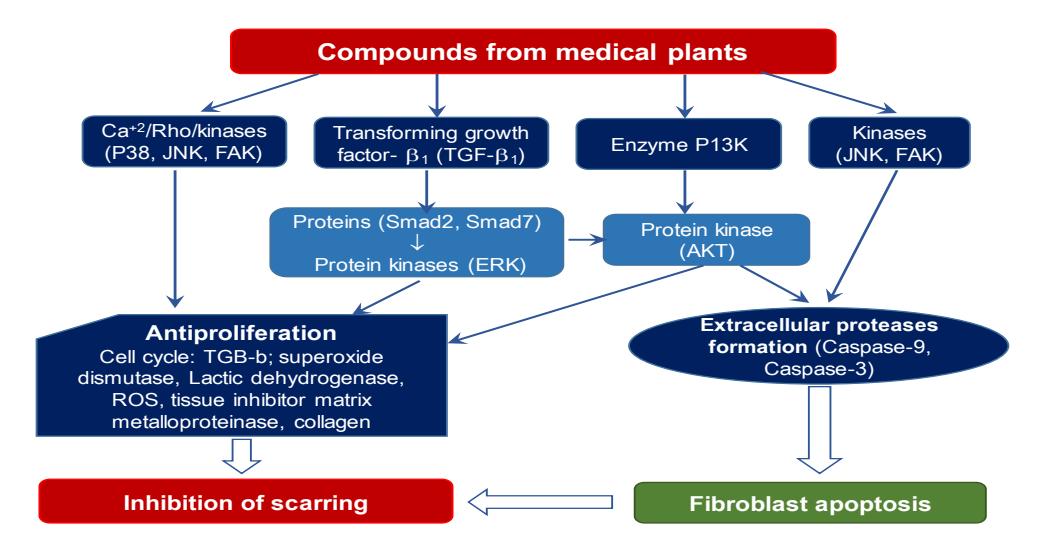
Scarring is an unfortunate and unavoidable consequence of cutaneous surgery [1]. Scar outcomes vary widely from a spectrum of fine and asymptomatic to unappealing keloids. Raised hypertrophic scars exist within this scar spectrum and occur by the over expression of extracellular matrix molecules during the proliferative and remodeling phases of wound healing [2]. Silicone gel sheeting has been shown to mitigate the development of post-operative scars. The use of silicone sheeting is generally considered as a first-line option for extenuating and treating hypertrophic scars [3, 4]. Medicinal plants are used for different therapeutic purposes or as precursors of drugs containing different phytochemicals. A large number of plants with medical properties have been studied for their effectiveness in the prevention of scarring [5, 6]. Observations in vitro and in vivo display extracts and compounds of medicinal plants with antiscar activity. Although many possibilities of scarring inhibitions using compounds from medical plants have been experimentally studied, but their action mechanism on scar healing is not well understood. Figure 1 summarizes the suggested mechanisms of antiscar activity of compounds obtained from medicinal plants [6].
The goal of this investigation was to create compositions of elastic biosynthetic silicone rubber with medicinal herbal extract for scar treatment.
Highly biocompatible, room temperature vulcanized polydimethylsiloxane (PDMS) was used. This PDMS has low hardness and strength, is hydrophobic, viscoelastic, and repels dust. Extracts of red onions (Allium cepa) have been selected for PDMS modification. Allium cepa contains a lot of organic substances: phenolic acids, thiosulfinates, quercetin, flavonoids, cysteine, sulfoxides, selenium, and other compounds. It was determined that freeze-dried Allium cepa extract changes PDMS surface tension, reduces its hardness and slightly deteriorates properties at tension. Therefore, Allium cepa extract was encapsulated into a low-strength polymeric shell to protect it from contact with PDMS. This shell can easily break down after mechanical loading that allow the extract to leak out and increase PDMS ability for scar healing. The morphology of the surface, the tendency to aggregate and the average size of microcapsules with polystyrene shell and Allium cepa core depend on the method of production and ratio of shell/core materials.