
Metal molybdates of the general formula $AMoO_4$ (A=Mg, Ca, Sr, Ba, Cd, Zn, Pb, etc.) have been studied extensively for decades, owing to their technological importance in a variety of applications such as phosphors, scintillation materials, microwave devices, catalysts, or optoelectronic devices. Many different preparation techniques have been used for the preparation of $AMoO_4$ (A=Mg, Ca, Sr, and Ba) ceramics. The choice of synthesis technique usually depends on variety factors that can shorten, facilitate, and reduce the preparation way [1]. Below, in the Fig. 1, there is possible to see the differences that occur after the annealing at the same temperature but using different heat-treatment ways of the same double oxide [2].
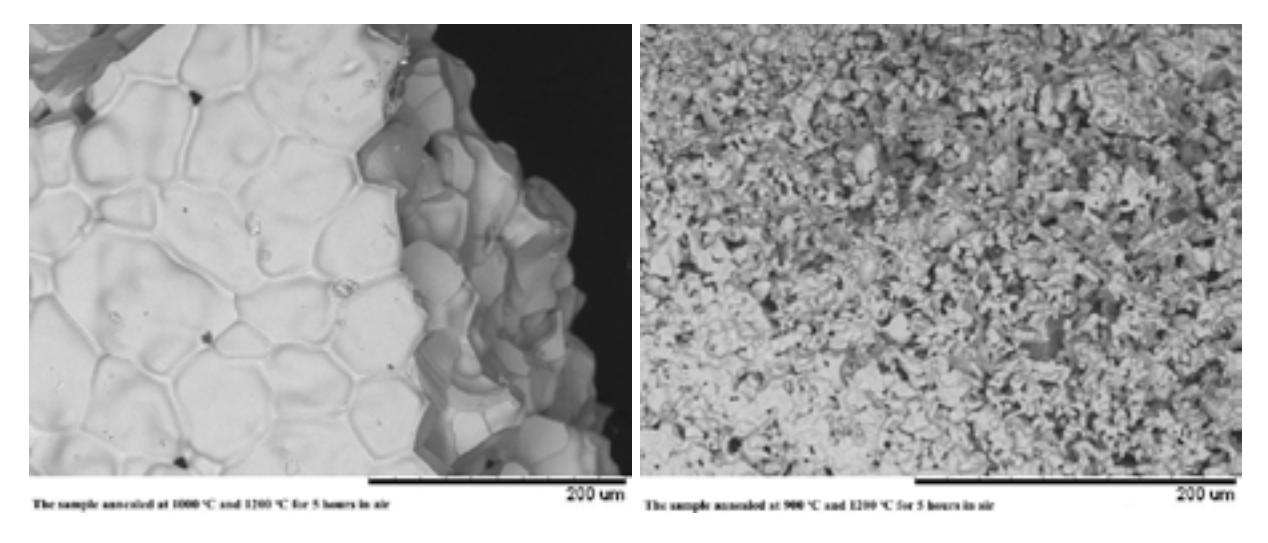
This is the reason why, in this work both the aqueous sol-gel synthesis method and co-precipitation technique were successfully used for the preparation of CaMoO4 ceramic material. Moreover, in order to show the peculiarities of the final compounds, the SEM, XRD and TGA-DTA characterization techniques were additionally also applied, which clearly revealed all differences of obtained products that was mainly provided by the uniqueness of the synthesis method.