One of the most relevant topics in terahertz (THz) photonics is a search of new ways to control THz radiation using compact planar solutions for THz imaging systems [1]. In particular, these issues become essential designing imaging systems using on-chip approach, because metal diffusion cannot be further used as suitable tool to fabricate THz diffractive optics components. We consider graphite that displays high electrical conductivity, is cheap and ecofriendly material. Moreover under standard conditions it is the most stable form of carbon.
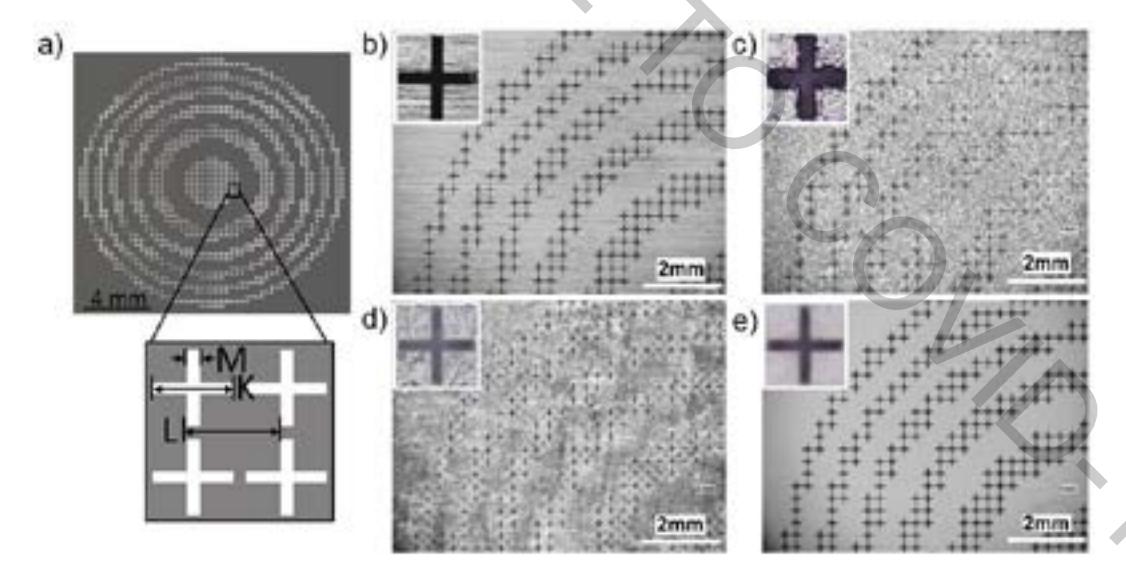
In this communication, we extend our previous study of silicon based Terahertz zone plates (TZP) [2] by exploring graphite TZPs as possible solutions for diffractive THz optical components [3]. We have investigated and explored the optical properties of flexible TZPs with integrated cross-shaped filters fabricated from three different materials. The first TZP was made of 10 μm thick graphite foil placed on 75 μm plastic. The second one was a few micron thick graphite layer produced by shading HB graphite pencil on a 100 μm thick paper sheet. To evaluate the impact of thin graphite layer on the second TZP, 100 μm thick paper sheet TZP was made in order to serve as reference for the second TZP. Finally, the metallic reference zone plate was made from 30 μm thick steel foil.
At first, flexible materials for TZPs were investigated using THz Time-Domain Spectroscopy (THz-TDS) by measuring their transmittance spectras. Results showed that graphite foil TZP and its reference metallic TZP had similarly expressed resonances around expected 0.6 THz frequency. Also, focusing performance was evaluated by recording imaging beam cross-sections in the focus plane using THz Continuous Wave (THz-CW) system. Results showed that graphite foil TZP operation was effective and very simmilar to the metallic TZP.
The findings suggest that graphite-based THz zone plates can provide an inexpensive alternative to metal-based elements for design of passive optical elements in THz imaging systems.