
Essentially, as in generic leak detection, the area of inspection is scanned starting at a high sensitivity level. To determine the location of the emission, reduce the sensitivity and follow the sound to the loudest point. If it is not possible to remove covers, or plates or doors, scan around the seams and vent slots. For more accurate diagnosis, ultrasound spectral analysis software helps identify sound patterns related to electrical emissions through spectral (FFT) and Time Series screens. Some of the more advanced instruments have on-board sound recording while others have on-board spectral analysis screens to help provide a diagnosis on the spot. There may be instances where it is difficult to determine the type of problem heard through the headphones. In these situations, a sound recording of the condition can be made and viewed on spectral analysis software. The sounds may be heard in real time as they are viewed on an FFT or time series screen for analysis. This enables inspectors to observe subtle problems that might be missed by just viewing a screen without sound the sound sample, showing a buildup and drop off of the sound along with movement on the screen, highlighted this condition. We investigated the present paper, the potential for partial detector remote detection in high-voltage devices (2 kV and above 40 kV) using the ultrasonic method shown in Fig.1. Systems manufactures and supports ultrasound instruments used for condition monitoring and energy conservation programs. The famous Ultra probe series is the industry standard for ultrasonic inspection. These portable instruments are among other applications used to inspect, locate diagnose & trend electrical discharge on electrical apparatus. Identify early warning & locate electrical faults such as arcing, tracking and corona. Inspection results are enhanced with data management and spectral analysis software[1]. The present work analyzed using, Low voltages: The main concern in low-voltage equipment is arcing. Typically, 110-, 220-and 440-volt systems are inspected with infrared imaging and/or spot radiometers for temperature changes. Hot spots, usually an indication of resistance, can be indicative of a potential for equipment failure or it could indicate a possible fire hazard. Mid and high voltage: Higher voltages often produce more potential for equipment outage. Problems such as arcing, destructive corona or tracking (sometimes referred to as 'baby arcing') and corona as well as partial discharges and mechanical looseness all produce detectable ultrasound that warn of impending failure. Detecting these emissions is relatively easy with ultrasound[2].
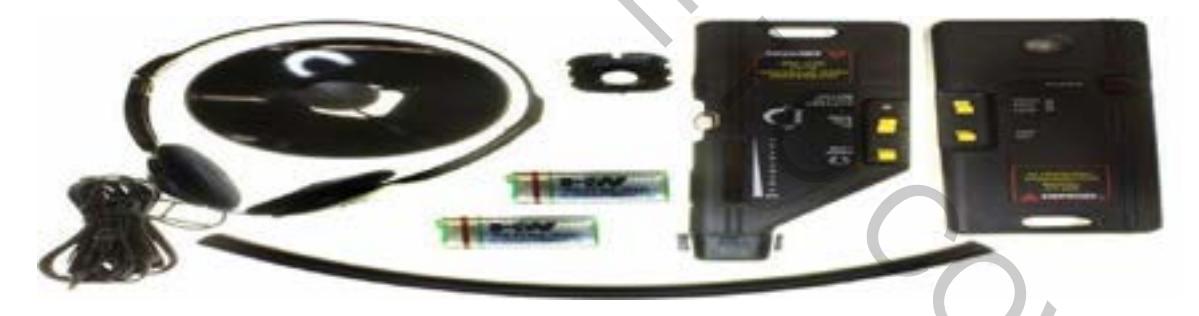
This work we can online condition monitors, an electrical cabinet monitor is mounted on the internal side of a door or wall facing the components. Utilizing an airborne scanner, a threshold level is set. Should an event of arcing, tracking or corona occur, the sound level will be above the ambient threshold and be detected. A 4 to 20 milliamp (mA) or zero to 10 VDC output can be selected to carry the signal to an alarm mechanism or red-light alert. In addition, these units contain a heterodyned signal to provide recording capability for recordkeeping and analysis purposes. The advantage to online monitoring is obvious: it is not operator dependent and will continuously monitor. Whenever a condition occurs to produce the potential for arc flash or flashover, it will be sensed and alarmed instantly. The present Ultrasound inspection is an effective screening tool for detecting the potential for arc flash incidents. When hand-held ultrasonic instruments are used to scan enclosed electrical apparatus the procedure is fast, accurate and simple. It can help inspectors by eliminating the need for wearing cumbersome, uncomfortable PPE during a preliminary survey[3]. Online continuous monitors can alarm personnel of the presence of arcing, tracking and corona in advance of an inspection.