
Non-small cell lung cancer (NSCLC) is a common and rapidly progressing cancer with poor survival rates. Plasma cell-free DNA (cfDNA) has been proven to have prognostic potential as well as being useful for molecular profiling and monitoring disease burden [1]. Next-generation sequencing (NGS) is the most efficient and sensitive method to detect mutations from cfDNA.
The aim of this study was to screen Lithuanian NSCLC liquid biopsy samples for common lung cancer-related mutations by targeted NGS and to determine their associations with disease progression.
Analysis was conducted in NSCLC patient plasma samples before treatment and after clinical progression. Sequencing libraries were prepared from DNA using Oncomine Lung panel targeting 11 gene 180 hotspot mutation regions.
Out of all 39 analysed plasma samples, in 24 taken before treatment largely from patients with advanced NSCLC, we identified 32 protein-coding pathogenic single nucleotide variants (SNV) and 2 small insertions/deletions. Most common pathogenic SNVs in Lithuanian population were in KRAS (10/24; 42%) and PIK3CA (14/24; 58%). Moreover, higher mutation load was detected in patient samples after clinical progression vs before treatment. Specifically, in a group of patients (n=4) overall mutation count was 4-fold higher in samples after immediate progression diagnosed during routine check-up at end of the treatment as compared to patient samples before treatment (p=0.203) (Fig. 1).
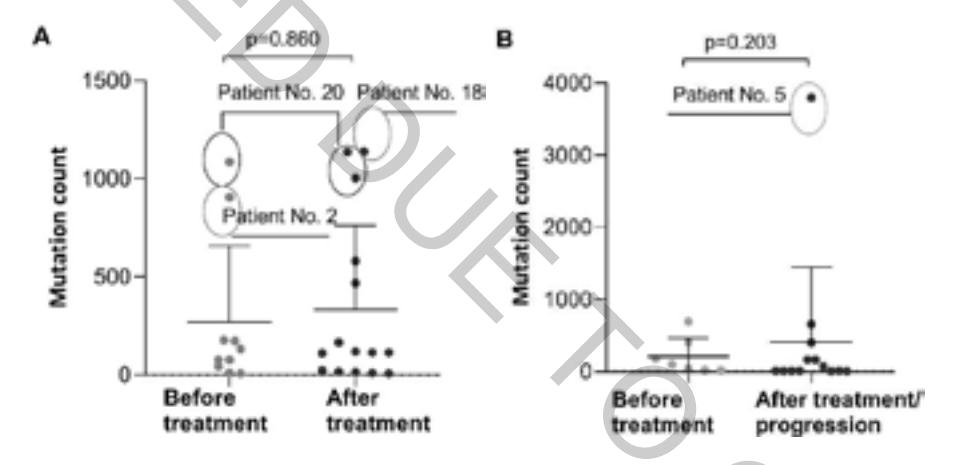
In conclusion, plasma cfDNA is useful for molecular profiling of NSCLC patients to capture clinically relevant somatic alterations in advanced stage patients and could be used as prognostic biomarker.