Thermoelectric materials attract a lot of attention, especially due to waste heat conversion into electricity which is expected to reduce the contribution of anthropogenic heat in global warming. Bismuth telluride is one of the best materials available for these applications, though thermoelectric perfomance of bare bismuth telluride is not sufficient for the waste heat conversion on a large scale.
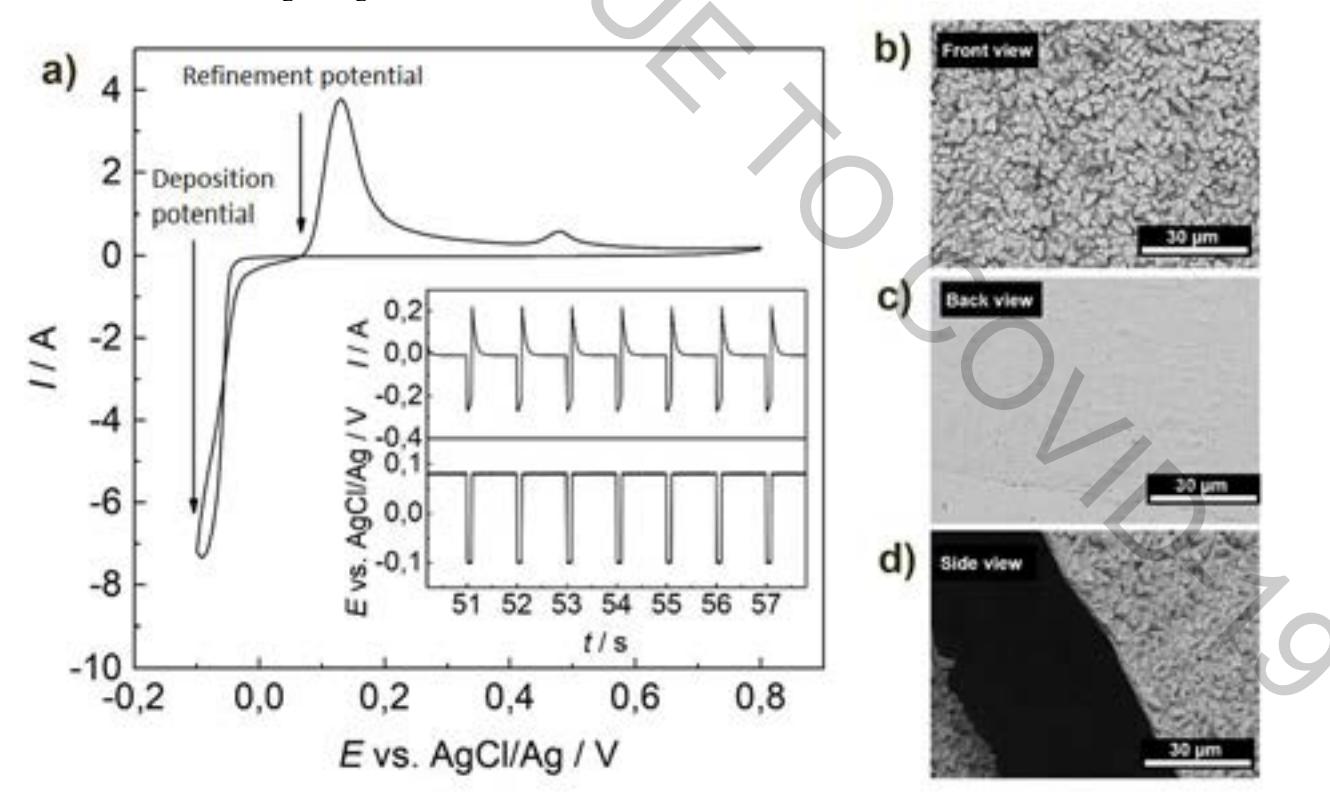
To increase the overall performance of a thermoelectric material, its thermal conductivity should be reduced. Although it is hard to suppress electronic heat transport while maintaining a high power factor, lattice thermal conductivity can be reduced without any fallout. Formation of Bi2Te3-based superlattices has proven to be useful as a way to reduce the lattice thermal conductivity. We have developed the electrochemical pulse potential controlled deposition of (Bi2)m(Bi2Te3)n superlattices with controllable Bi-content [1]. The superlattice structure of the deposits was proved via XRD analysis, XPS analysis, and TEM. The composition is controlled by the ratio of Bi3+ and TeO2 precursor concentrations in the electrolyte. Moreover, we have shown that bismuth interlayers can be removed from the superlattice structure by selective anodic oxidation, with the oxidation resulting in the product corresponding to Bi2Te3 by stoichiometry but having an expanded crystal structure. These results clear the way for new synthetic strategies of high performance Bi2Te3-based thermoelectric materials preparation.
We also consider effect of pulse deposition parameters, electrolyte composition, pretreatment of substrate on the nucleation and growth of the superlattice structure, morphology and uniformity of the deposit. Characterization of the effects helps to find optimal conditions for preparation of uniform films for thermoelectric applications.