
Modern days any mechanical or electronic system, noticeable the energy expended eventually becomes heat[1]. Particularly the computers: the microchips in a PC move information back and forth, but in the end the electrical energy becomes heat. If we measured the heat produced and the energy consumed, we had found the balance exactly. Physicists call this principle the "Conservation of Energy". In this prospective faster, more powerful computer produce more heat than smaller, portable models. For example, a typical notebook computer, used moderately, consumes 40 watts of electricity and produces an equivalent amount of heat. A lightly used desktop machine, by comparison, uses about 100 watts. Mobile devices use far less power and produce correspondingly less heat; power consumption is limited by the small, weight-saving battery. A typical smartphone such as the iPhone 4S consumes only a few watts when making a phone call[2]. Other hand, the radiation from a component which draws more current is higher than the others. Also, the other reason is the higher internal resistance among all the thousands of circuits. So exactly speaking as long as our computer is on, heat is always generated. The following causes of more heat generation and issues
The Processor and Graphic card are two such components which cause the maximum heating.
The heat these components generate is not always the same. With the increase in load (more operations to be carried out) the temperatures get higher and higher.
Usually during gaming, the GPU has to handle lot more high-level calculations. In some cases, the temperatures of the graphic cards sore higher than that of the processor.
Optical Disk Drives also produce large amounts of heat during reading and writing from and into CDs and DVDs respectively.
The other sources of heat are also the LEDs. Though the amount of heat they liberate is less, it can't be neglected completely. But if this heat is not being removed fast, it could cause some serious damage to all the components inside and hence poses the ultimate threat to our computer. This are the issues in the present electrical PC systems.
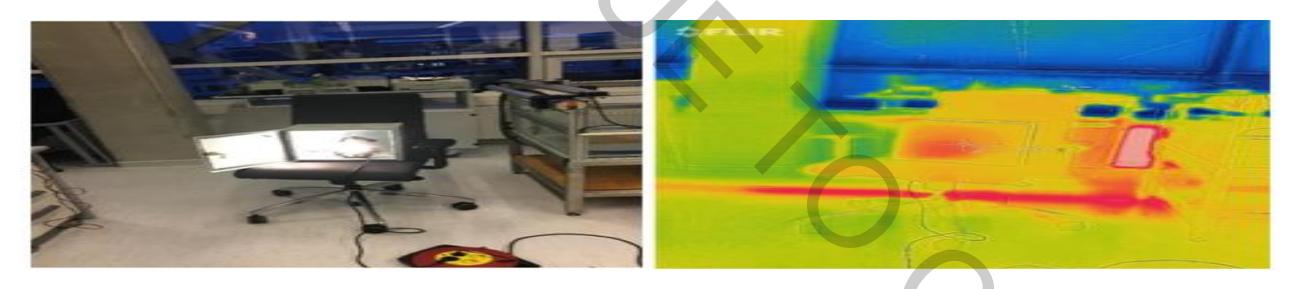
Considered all above issues, we proposed possibilities of heat source detection using the thermographic method[3].This method,troubleshoot hotspots, find hidden faults, and confirm repairs quickly with the ergonomic, high-resolution. so, we can easily and comfortably diagnose electrical or mechanical issues, even in hard-to-reach areas. The proposed work,we had the experiment with Forward-looking infrared (FLIR) camera shown in Fig. 1 and their specification. The FLIR cameras ONE Pro helps we find invisible problems faster than ever, whether we inspected electrical panels, troubleshooting mechanical systems, looking for Heating, ventilation, and air conditioning (HVAC) problems, or finding water damage[4]. This FLIR ONE Pro-Series camera offers 4x the native resolution of the FLIR ONE Pro LT, for sharper image clarity that's further enhanced by the revolutionary FLIR VividIRTM image processing. Measured temperatures more than 3x higher than any FLIR ONE model—up to 400°C (752°F)—with a sensitivity that detects temperature differences down to 70 mK. Packed with powerful measurement tools, the FLIR ONE Pro will work as hard as we do.