
Chronic periodontitis (CP) is a highly prevalent oral disease affecting 20-50% of human population worldwide. Besides its negative impact on quality of life, CP is also strongly associated with higher risk of life-threatening conditions such as cardiovascular diseases, type 2 diabetes etc. Various mechanisms of pathogenesis of CP are epigenetically regulated and microRNAs (miRNAs) are considered as one of the key modulators that influences periodontal homeostasis. The aim of this study is to analyze miRNA expression profile in gingival tissues by applying high-throughput technologies, searching for potential biomarkers of CP that may facilitate early diagnostics of the disease.
miRNA expression analysis was performed in 8 inflamed and 8 healthy gingival tissue samples by using microarray platform (Human miRNA Microarrays, 8x60K format). Fifteen significantly differently expressed miRNAs were selected for validation in 80 gingival tissue specimens from 48 CP patients and 32 controls by using quantitative reverse transcription PCR and the associations with clinical-pathological characteristics were assessed.
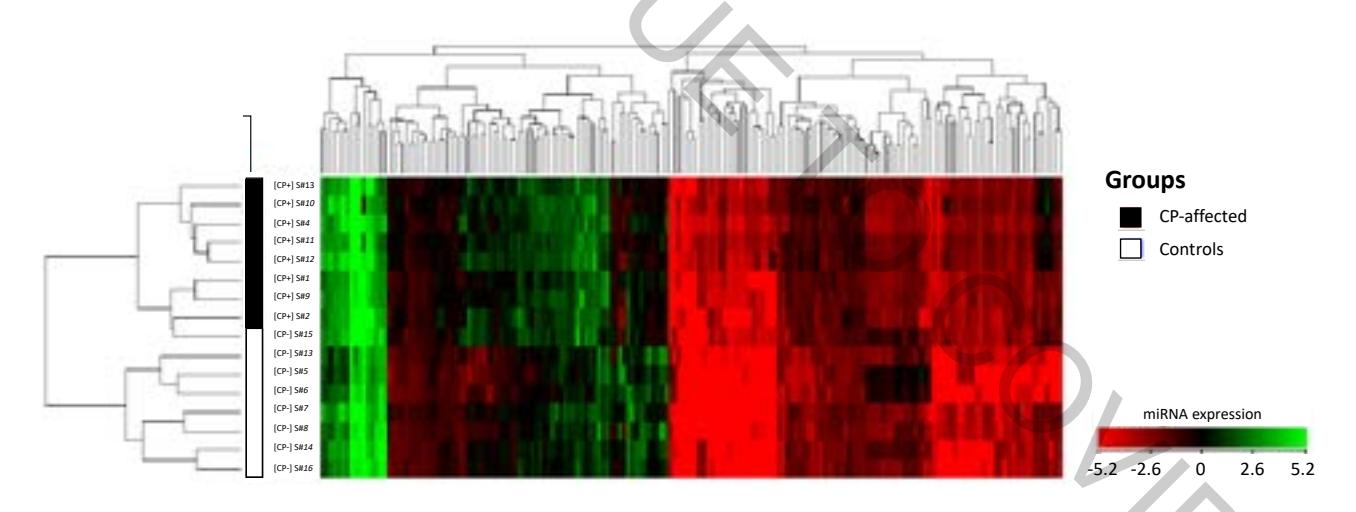
The microarray analysis indicated a large number of differently expressed miRNAs in patients with CP compared to healthy controls (Fig. 1). The comparison of 15 selected miRNAs in CP-affected vs. healthy gingiva demonstrated overexpression of ten miRNAs, out of which miR-A (P<0.001), miR-B (P=0.006), miR-C (P=0.041) were upregulated significantly (FC≥1.5). Furthermore, the expression of miR-A and miR-C were also increased in a group of patients with periapical lesions compared to control group. Therefore, abovementioned miRNAs were chosen for further miRNA analysis in human bodily fluids.
The application of high-throughput technologies enables effective identification of periodontitis-specific miRNA expression profile. The results of present study suggest miRNAs as potential biomarkers of periodontal disease that could be applied for early diagnostics and treatment purposes.