
Nowadays people spend most of their time indoors: sleeping at home, working in offices, eating in canteens or restaurants, or spending free time in cinemas, shopping malls and other stores. It is in those places where we are exposed to a high content of volatile organic compounds (VOCs). In this work, we focused on places where we spend a great part of our time every day.
Human breath contains more than 1000 different VOCs [1], and some of them can be used as biomarkers for several diseases like diabetes [2], several types of cancer [3], and fungal infections [4] among others. In this work we will focus on the understanding of the background VOC profile in breath of healthy volunteers; and how their exposure to environmental compounds could modify this profile.
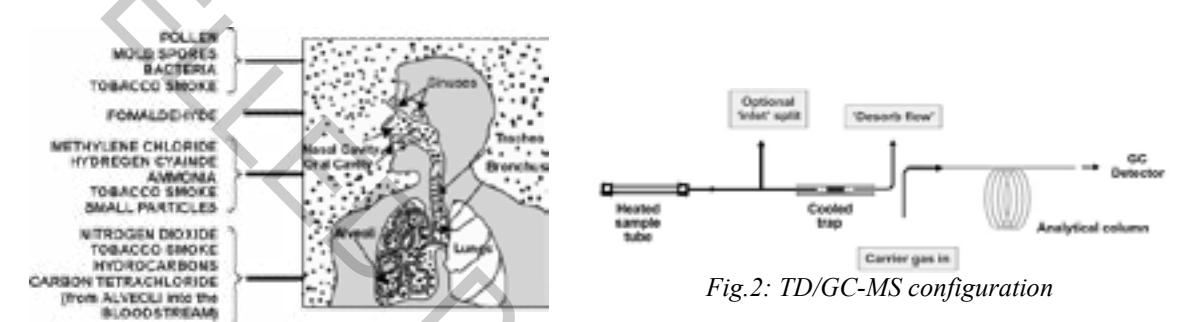
Air samples were taken from the selected places, to benchmark the background compounds. Samples were collected using thermal desorption (TD) tubes and purged into a gas chromatography with mass spectrometer (GC-MS). Then, breath samples from participants were collected before starting their daily work, and at the end of the workday. Breath sampling was obtained using a self-made plastic bag collection system. Optimization of system parameters was performed to get good compound separation and identification.
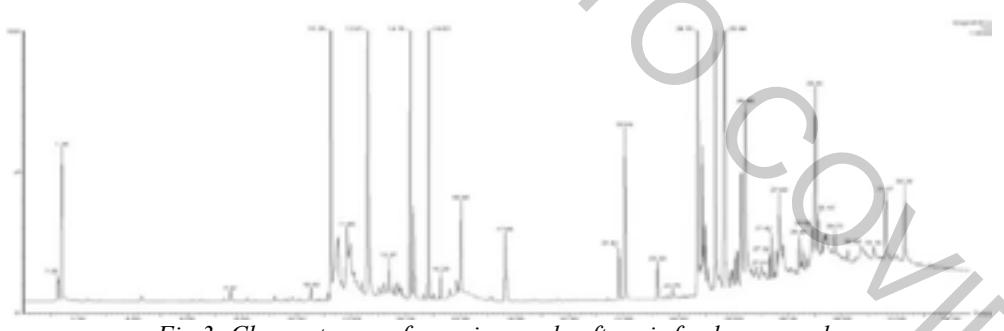
Figure 3 shows the high concentration of several VOCs in a study place after using some air freshener, like Pinene, Limonene among plenty of other terpenes; and some more toxic compounds like Benzaldehyde or Benzyl acetate. If people are exposed to VOCs, some of them are incorporated into respiratory system and their variation in breath could tell us how those compounds behave inside our body, some will be exhaled, others might be retained and different metabolites can be formed. In conclusion, when using breath samples for disease diagnosis we should take into consideration the exposure to external contaminants which could influence the VOCs profile.