Soil pollution is toxic to both the environment and to the organisms that live in it. In Europe the soil is usually mostly polluted by heavy metals [1]. Heavy metals in low concentrations are essential for living organisms, but excessive amounts of them can become genotoxic and cause damage to their DNA [2], thus it is important to study the effect heavy metals have on living organisms.
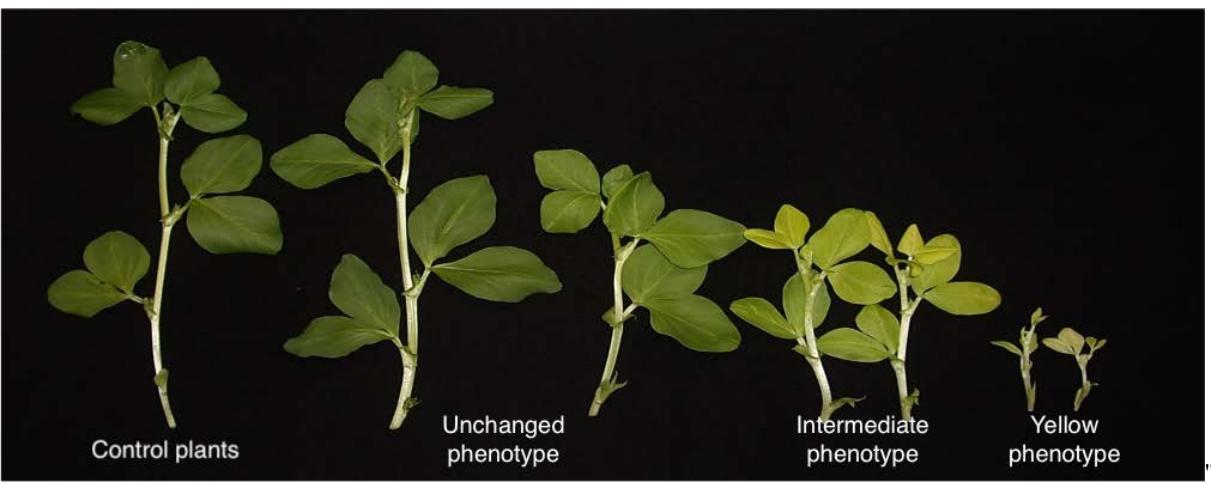
In this work, the genotoxic effect of soil in closed Vilnius city plants "Grąžtai" and "Rimeda" (GRD) was investigated using the Vicia faba chlorophyll morphosis test system under cobalt stress (fig. 1). The heavy metal-induced oxidative stress level was investigated by evaluating the variation in biochemical markers (chlorophylls, carotenoids, proline, hydrogen peroxide, flavanoids, polyphenols, and ascorbic acid), as well as the potential modulating effect of salicylic acid on the amount of these markers in plants. Functional CDDP tags were used to investigate soil genotoxicity.
Research has shown that the soils in the former factories “Grąžtai” and “Rimeda” have genotoxic effects on V. faba plants by inducing polymorphism in CDDP profiles. It was also found that growing plants in GRD soil contaminated with heavy metals significantly increases the amount of H2O2 (p < 0.05) and reduces the concentration of antioxidants - free proline (p < 0.05) and ascorbic acid (p < 0.05) in plant leaves. In addition, Co induces Vicia faba chlorophyll morphoses, which are marked by a significant decrease in chlorophyll and carotenoid levels and an increase in lipid peroxidation levels (in all phenotypic groups (unchanged, intermediate and yellow) in p <0.05 compared to control).