
The contamination of marine and freshwater ecosystems with plastic, and especially with microplastic (MP), is a global ecological problem of increasing scientific concern. Plastics are used in a wide variety of items and have displaced other important materials such as metal, glass, and wood. Microplastics are formed from polyesters, polyvinylidene chloride, polycarbonates, and many other organic polymers for use in a huge and growing range of applications. The biggest amount of plastic was applied at packaging, building, construction, and automotive industry (Fig. 1) [1]. Every year more than 8 million tons of plastic, including microplastic, is dumped into our freshwater systems, rivers, seas, and oceans [2].
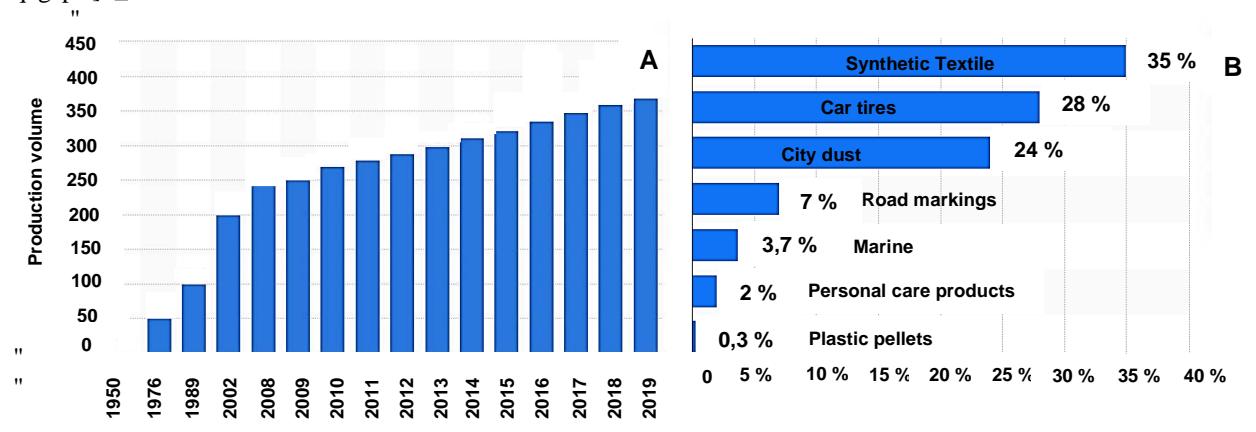
Wastewater Treatment Plants (WWTPs) are one of the biggest sources of microplastics to the water circulation systems [3, 4]. Primary microplastics include household, industrial products such as cosmetics, personal care products, cleaners, and many other daily use item [5]. Secondary microplastics are released from large plastic parts because of mechanical effects, UV radiation or microbiological degradation. The size of the microplastic is less than 5 mm. Newest research have showed that WWTPs could remove 55-99 % of microplastic particles, but despite that fact, WWTPs is still one of the main MP source [6].
The principal aims of this study: 1) to investigate microplastic contamination in wastewater samples; 2) to present the methods applied for MP analysis including sampling, processing, identification, characterization, and quantification; 3) to evaluate the abundance of microplastic.
In this research, more than 30 wastewater samples were investigated and the presence of microplastic was confirmed. MPs were identified and characterized by the microscopic and spectroscopic analysis methods. Shape, color, and size of particles were described. This investigation let us identify what type of microplastic is mostly found in wastewater contamination. The results indicated the necessity for novel actions to decrease microplastic amount in wastewater. Research of microplastic properties could be the first step in improving our aquatic ecosystem and finding the new innovate methods for removing this pollution source.