The search for new battery electrode materials is becoming one of the most active areas of research in modern chemistry and materials science. NASICON-structured phosphate framework compounds with general formula NaxMe2(PO4)3, where Me is usually a transition metal, started to emerge as some of the most potent solid electrolyte and electrode materials for the upcoming generation of Na-ion batteries. [1] They show superior thermal and electrochemical stability, low-cost and environmental sustainability. However, the complete understanding of factors governing their properties and limitations is still lacking.
Density Functional Theory (DFT) calculations have become a standard tool for calculating the electronic structure and molecular properties of, in principle, any chemical system. They not only help to obtain physical parameters but also proved to be extremely helpful in elucidating chemical properties, analyzing spectroscopic data, guiding materials synthesis etc. Raman spectroscopy is a versatile tool to not only investigate the vibrational properties but also relate them to other material properties, identify phases and their formation signatures. [2]
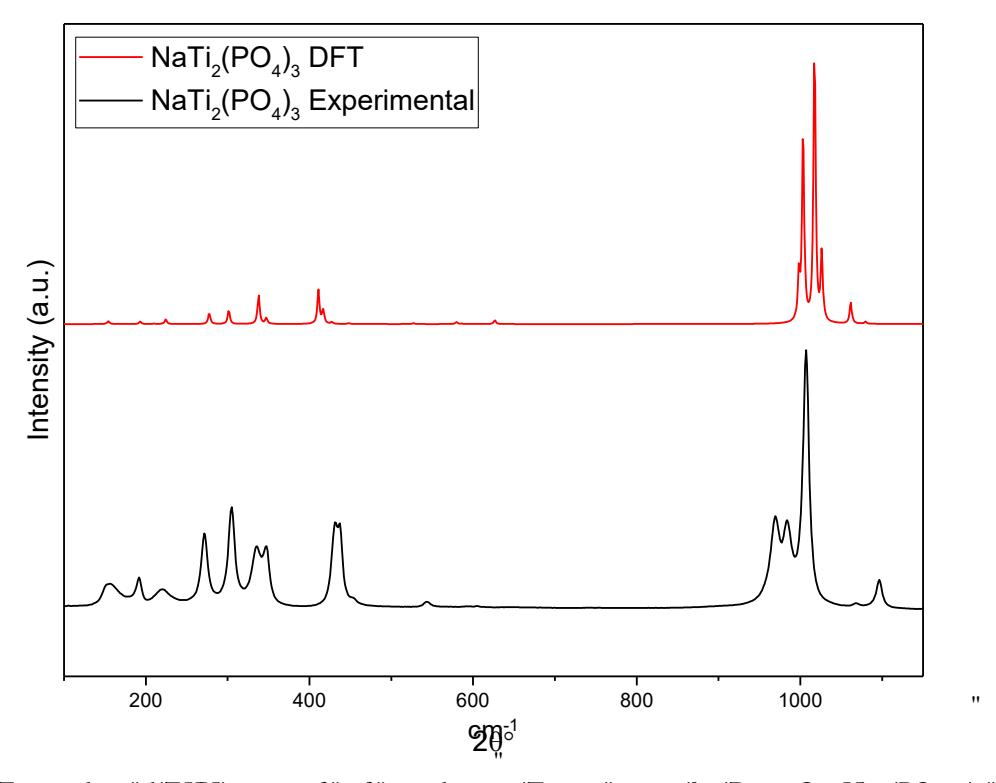
In this study, we perform hybrid DFT calculations, compute their Raman spectra and compare results to experiments of Na1+2xMnxTi2-x(PO4)3 (x = 0.0; 1.0) compounds. The calculations results show good agreement with the available experimental data (see Fig. 1) and indicate that Raman spectroscopy is a capable technique for investigating phase formation in this and similar systems and that DFT calculations are indispensable for helping to interpret the spectroscopic data.