
Cellulose is a polymer consisting of β linked D-glucose. Cellulose degradation is a very slow process [1]. Cellulose is mainly degraded by cellulase enzyme which is commonly produced by bacteria and fungi [2]. There are three types of cellulases: endoglucanases, exoglucanases and β-glucosidases. They can be used very widely, for example: paper, textile industries, as detergents in laundry, renewable energy production [3].
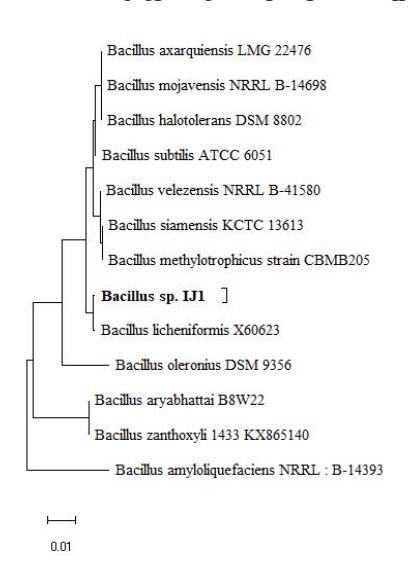
In this research microorganisms were isolated from biogas straw digestate. Cellulolytic activity was indicated by clear zones around the colonies on CMC with Congo red agar plates. Sixteen different morphology microorganisms that produce cellulases were isolated. The largest activity zone produced microorganism was named IJ1 and selected for further investigation. Phylogenetic analysis of 16S rRNA sequences showed that IJ1 isolate belongs to Bacillus spp. (Fig. 1). Different media and incubation time for biomass along with cellulase production were optimized.
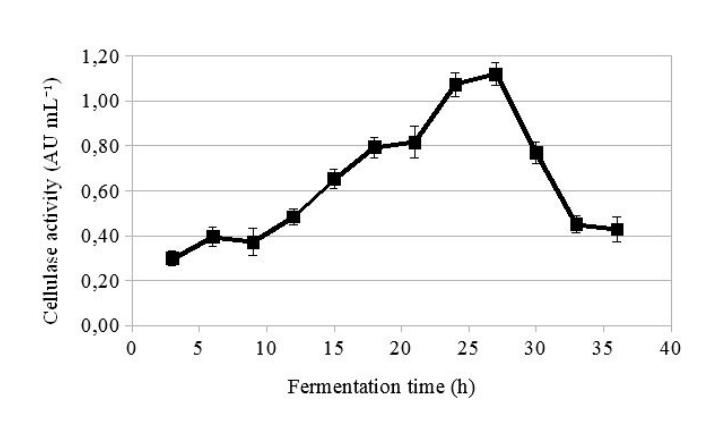
Maximum amount of cellulases was reached at 27 hours of fermentation (Fig. 2), produced cellulases were most active in pH 5 and temperature 45 °C. Cellulase activity was measured qualitatively on agar plates, and quantitative - neocuproine method Based on electrophoretic analysis, there is more than one cellulase produced by Bacillus sp. IJ1. The peak of biomass was reached at 24 hours of fermentation.
See you in Vilnius!