
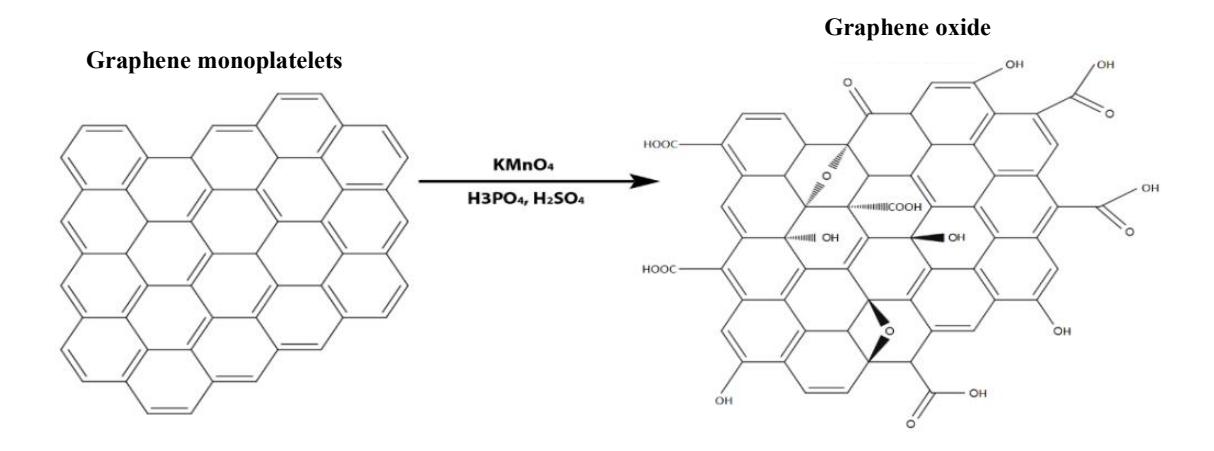
Graphene nanomaterials (GMs), such as graphene oxide (GO) due to unique structure and properties have been widely used in various fields [1]. Thus, the rapid increase in production and application, probably will lead to the inevitable release of GMs into water and soil environments with increment of potential health and ecosystem risks [2]. There are only some works on the ability of GO to adsorb heavy metals from aqueous solutions [3]. However, so far, only a few studies have been conducted regarding the effects of GO on plants. Also, the information related to the ability of GO to reduce the toxicity of heavy metals on plants by adsorption is still limited.
Therefore, the aim of the study was to examine the phytotoxicity of GO using garden-cress (Lepidium sativum L.) as a test-organism and to evaluate the ability of GO to modify the uptake of metals by plants exposed to metal mixture.
The metal ion mixture (MIX) (Ni(II) 0.034 mg/L, Zn(II) 0.1 mg/L, Cr(III) 0.01 mg/L and Cu(II) 0.01 mg/L) was prepared according to the maximum-permissible-concentrations (MPC) accepted for the inland waters in the European Union. The mixtures MIX20, MIX40 and MIX80 were prepared by increasing the MPC of every single metal ion by 20, 40 and 80 times, respectively. The GO concentrations (1, 20, 40, and 80 mg/L) were chosen in accordance with the previous study [4] concerning the ability of GO to adsorb heavy metals. In addition, the phytotoxicity of mixtures where GO was combined with MIX was evaluated.
Obtained data showed that tested concentrations of MIX, GO and MIX+GO in the most cases did not affect seed germination, root growth and biomass of roots as well as above-ground parts of plants but influenced photosynthesis, increased the production of carotenoids and H2O2 with further activation of lipid peroxidation. In addition, statistical analysis showed that in some cases the effect of metals on plants exposed to combined exposure to GO and MIX decreased. This study revealed that GO are promising and advanced adsorbents of metals.