Rechargeable lithium-ion batteries with organic electrolytes are widely used as commercial energy storage devices. They have many attractive properties, such as high efficiency, energy density and stability. However, as the energy storage demand increases, growing prices on scarce lithium resources also increase, making lithium-ion batteries less attractive. On the other hand, sodium is the sixth most abundant element in earth's crust. Another big issue of commercial batteries remains the usage of organic solvents, which increase production cost and raise safety concerns. This problem is solved by replacing organic solvents with aqueous electrolytes. Traditionally, the use of aqueous electrolytes in batteries was limited by narrow potential window of operation, beyond which water decomposes. However, recently developed water-in-salt electrolytes can expand this potential window [1], making aqueous electrolytes a viable alternative. However, the problem of electrode material stability during operation needs to be solved to fully utilize this technology.
With general formula of Na3M2(PO4)3, NASICON-structured materials are exceptional due to their unique framework structure providing fast Na-ion transport. They can offer high theoretical capacity and operating voltage, however, might suffer from poor cycling performance especially in aqueous electrolytes [2].
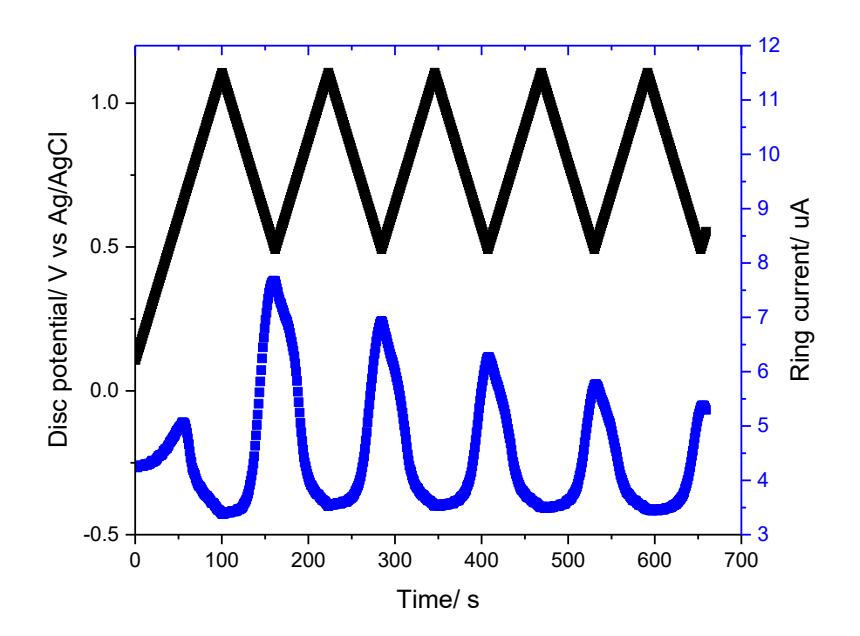
Here, we present a rotating ring-disc electrode (RRDE) study of the Na3MnTi(PO4)3 degradation in aqueous electrolyte. A similar study was carried out on LiMn2O4, and showed that material degradation takes place in fully charged or fully discharged state [3]. In the case of Na3MnTi(PO4)3, the results show that degradation occurs only during the discharge phase (0.7 V vs. Ag/AgCl) or reduction of Mn3+, suggesting that it is driven by chemical dissolution of Mn2+ formed in aqueous media. The degradation of Na3V2(PO4)2F3 (NVPF) was also studied with the same technique. Overall, the understanding of degradation mechanisms of electrode materials is crucial for their mitigation and RRDE is simple and useful tool for this task.