
The aim of this paper is to present a novel biological method of metal-oxide nanoparticles (NPs) synthesis with the use of macroalgal extract and to analyze parameters, which can have an influence on this synthesis. As an example, ZnO and CuO NPs were biosynthesized with the use of extract obtained from green macroalga – Cladophora glomerata. Macroalgae can be used for synthesis of many different metal-based nanoparticles due to the presence of bioactive compounds such as polysaccharides, pigments, proteins and antioxidants, which act as biocompatible reductants [1,4].
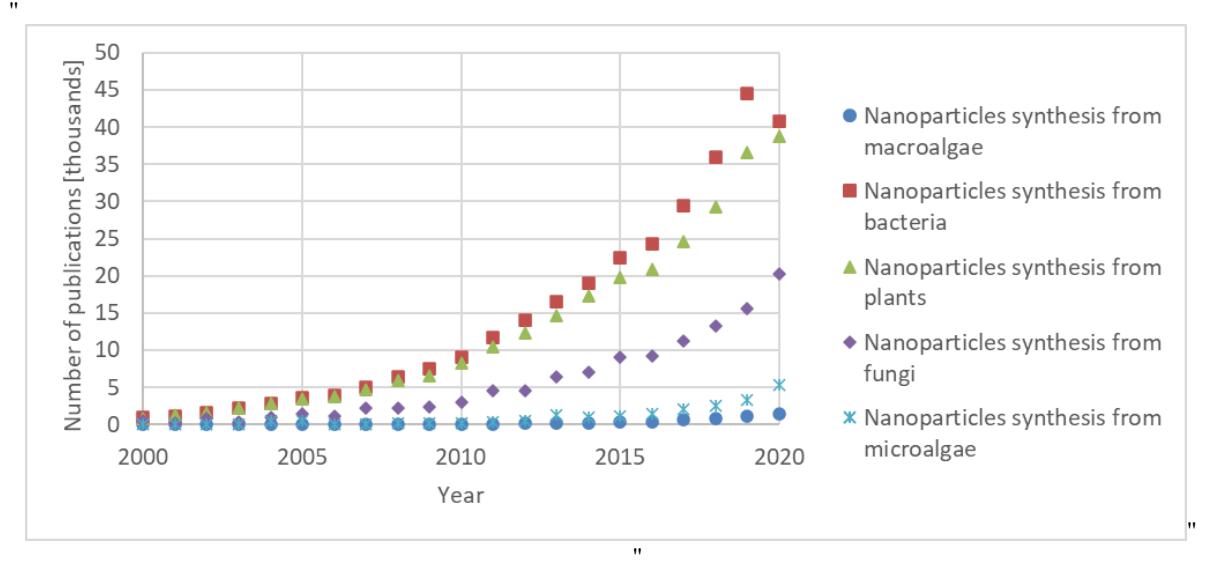
NPs can be synthesized in three ways: physical, chemical and biological. Nowadays, biological methods are more and more often examined, because they are environment friendly and low in toxicity [1]. Currently, among biological methods, very popular is biosynthesis with the use of plant extracts (mostly made from leaves), bacteria, fungi and microalgae [2]. However, lately methods based on macroalgal extracts are increasing in popularity [3]. Fig. 1 compares the number of publications on different reducing agents used in NPs biosynthesis over the past 20 years.
In the present study, different biosynthesis methods of ZnO and CuO NPs with the use of macroalga extract were compared. Algal extract was obtained by ultrasound assisted extraction with water or ethanol. The solvent used for extraction has an influence on later NPs biosynthesis. It was found out that many parameters influenced the efficiency of nanoparticles biosynthesis, among them were: type of salt used (inorganic – nitrate/sulfate or organic – acetate), salt concentration, salt to extract ratio, pH, temperature, time of incubation.
The highest yield of NPs biosynthesis has been obtained for the use of organic salts, salt concentration higher than 0.1 M, pH 12, organic solvent (ethanol) and temperature higher than room temperature. Further investigation is needed to find the optimal temperature, salt to extract ratio, time of incubation and if the use of ultrasounds or microwave radiation can improve the process.