Wood is one of the most abundant building materials used in residential and non-residential buildings, furniture constructions, and decoration. Due to high sustainability, thermal and electrical insulating properties and aesthetics, wood demand is increasing every year [1].
Nevertheless, the wood used in listed industries, require high resistance to mechanical and chemical damage. One of the main challenges is resistance to fire - retardancy. At highly elevated temperatures wood burns producing flammable volatiles which are followed by ignition and flame spread across the surface increasing the rate of heat transfer to deeper layers of wood. Scientists are creating materials to encounter minor issue – usually organic compounds (phosphorus-based, phosphorus-nitrogen, phosphorus-halogen compounds) are used to impregnate the wood, though, it can produce toxic volatile compounds during pyrolysis. Growing awareness of the toxicity of such compounds leads to further investigation of new materials, systems and methods which could improve wood retardancy. This work proposes an inorganic GdPO4 compound produced by in situ hydrothermal synthesis in woods matrix as a new alternative and innovative method to increase retardancy [2-4].
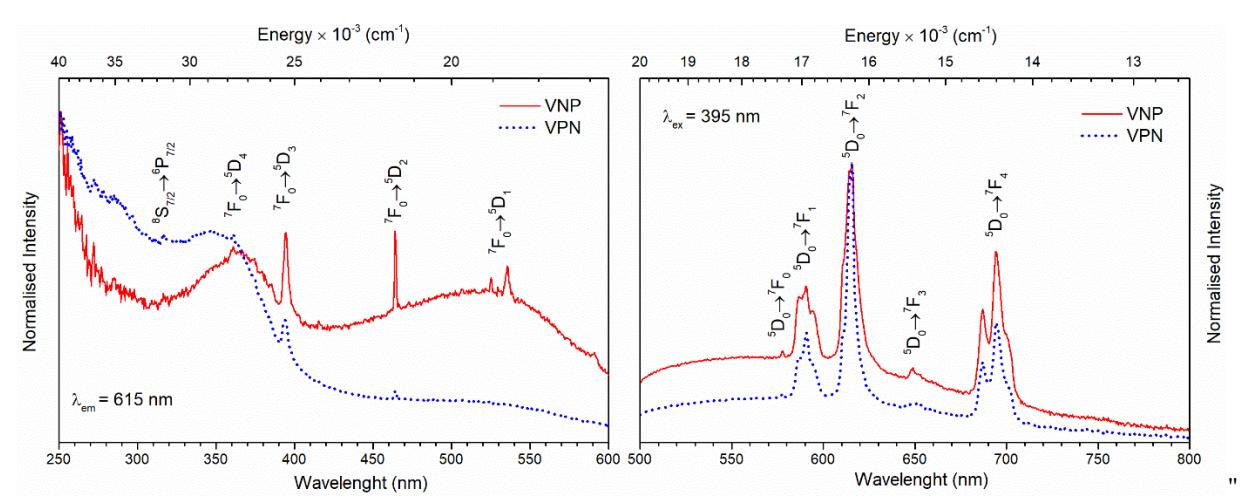
Samples of soft wood were prepared by in situ hydrothermal synthesis at 110°C initially retaining wood in a vacuum and later introduced to precursor solutions of GdNO3·6H2O/EuNO3·6H2O (VNP) and NH3H2PO4 (VPN). Characteristics of samples after synthesis were observed by scanning electron microscopy (SEM), optical properties (Fig. 1) were used to determine if wood surface contains the desired ceramics, thermogravimetric (TG) analysis was performed to inspect GdPO4 impact on woods retardancy.