Cell lines have been used in cancer research for many years. However, an ideal model of cancer must resemble primary tumor as close as possible. Established lines that have been passaged for a long time adapt to an artificial in vitro environment and lose their original phenotype due to genetic drift. Also, each cancer patient and each disease is different. If we want to gain a broader knowledge about cancer intertumoral heterogeneity, we are constantly in need of new cancer cell lines. It is especially important for pancreatic cancer, which is one of the most aggressive cancers known. Although pancreatic cancer accounts for only 3% of cases among the leading cancer types in the United States, it places fourth according to the number of deaths. When metastatic pancreatic cancer is diagnosed, the 5-year patient survival decreases about ten-fold in comparison to an early detected disease [1] and, unfortunately, most of the time pancreatic cancer is diagnosed at an advanced stage. Difficulties regarding an early pancreatic cancer detection arise from great genetic and phenotypic diversity in pancreatic tumors, which makes it difficult to develop sensitive and specific biomarkers [2,3]. Here, again, new cell lines that can represent a variety of pancreatic cancer cases become critically important.
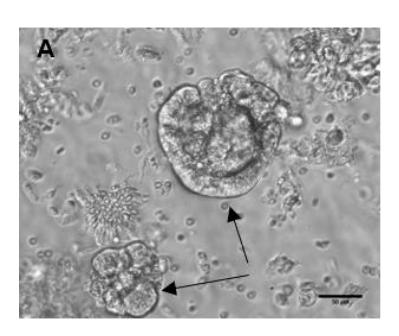
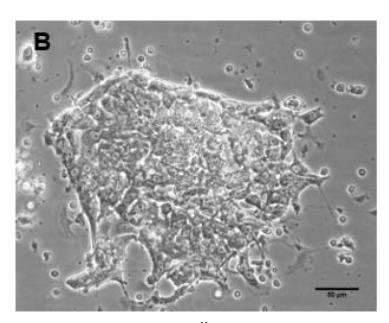
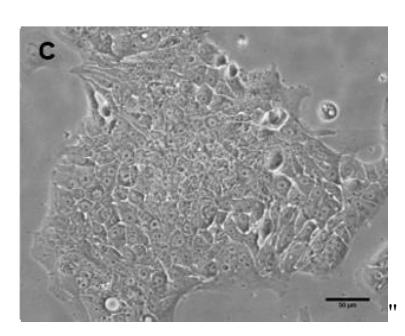
In this study we present a novel pancreatic ductal adenocarcinoma cell line Capan-26. This cell line was derived from a primary tumor of a 65-years old female Lithuanian patient with pancreatic ductal adenocarcinoma stage II. To our knowledge, it is the first pancreatic cancer cell line derived from a Lithuanian patient. We characterized the cells functionally and genetically: determined their growth rate, detected expression of pancreatic cancer and stem cell markers (CEACAM6, CA19-9 and CD44, OCT4, ZEB1, respectively), confirmed that cells form colonies in soft agar, analyzed karyotype and found mutations of cancer related genes KRAS and TP53. Also, we discovered that Capan-26 cell line is sensitive to gemcitabine, drug that is widely used for pancreatic cancer treatment.
In conclusion, we believe that Capan-26 cell line represents an effective tool for preclinical pancreatic cancer studies.