
One of the most popular analytical method used around the world is gas chromatography (GC), which is applied for various volatile compounds analysis. Principle of gas chromatography is separation, performed on chromatographic column. GC column is usually a thin silica capillary placed in an oven with precise temperature control. Analytes are being retained by stationary phase in the column and propelled forward by gas flow and temperature increase [1]. Ramping temperature from 40-60 °C to even 200-300 °C is common in GC applications. This way researchers can control analyte separation and make analysis more efficient. The problem with standard GC ovens is that, they did not evolve significantly since they were started to use in 1970s. It takes a long time to cool down after each run and they commonly cannot be cooled bellow ambient temperature what is a must for some more volatile compound analysis [2]. We aim to solve this problem with in-house designed and built cooling add-on prototype for GC oven.
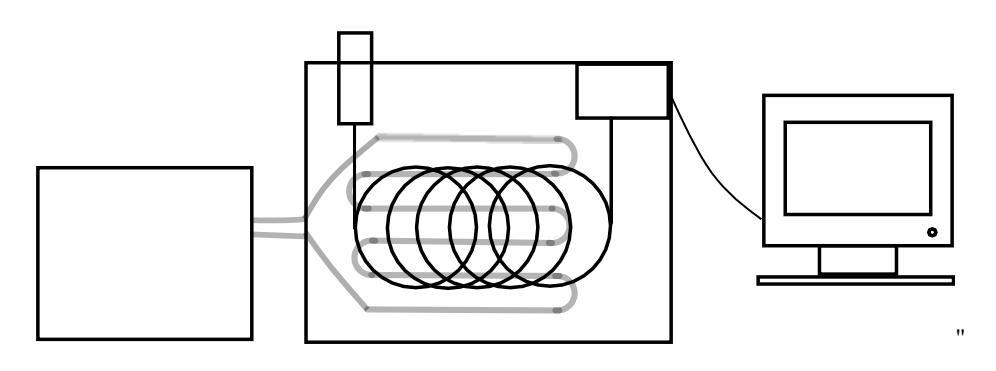
This prototype scheme showed in Figure 1 is based on evaporating cooling principles [3]. Unit outside the GC houses compressor, condenser and thermal expansion valve. Compressed refrigerant is cooled down in condenser and travels inside the GC through isolated transfer line where it expands inside the evaporator and cools down the GC oven. Then refrigerant is transported back to compressor, where it performs the cycle again. By using this prototype, we have achieved faster cooling of the GC oven. Temperature in the oven decreased from 200 °C to 40 °C in about 1.5 min. instead of around 8 min normally. That is an improvement of almost 80%. This kind of increase would speed up routine analysis in the laboratory significantly by reducing GC system equilibration time between injections.
Secondly, we tested the system by measuring lighter gas mixture which mostly contains isobutane and its isomers. Normally we could only start the analysis at 35 °C in the GC oven. Starting at this temperature we couldn't see any separation but with application of our cooling add-on, the analysis could be started at -10 °C and we registered three separate peaks. This broadens capabilities of GC analysis and it is very beneficial for highly volatile compounds screening.
These results are just the beginning of our work on this topic and we will continue with improvement of the prototype.