Iron hexacyanoferrate, as well known as Prussian Blue, is an inorganic compound with formula Fe4[Fe(CN)6]3. This salt is electrochromic material with specific electrochemical and optical properties [1], which are widely used in formation of electrochemical [1] sensors and biosensors [2,3].
Yeasts are a single-cell fungi [4], which is widely used in baking and as leaveling agent, therefore is very affordable and cheap. Yeast cell is an eukaryotic microorganism and has a cell membrane with enzymes – oxidoreductases [5]. These enzymes are involved in oxidation – reduction reactions [5]; during such a reaction, the corresponding iron salts can form Prussian Blue in yeast cell membrane. Yeast cells, modified with Prussian Blue, have a higher electric conductivity. This property could be used in electrochemical analytical system or to form a bioenergetic element.
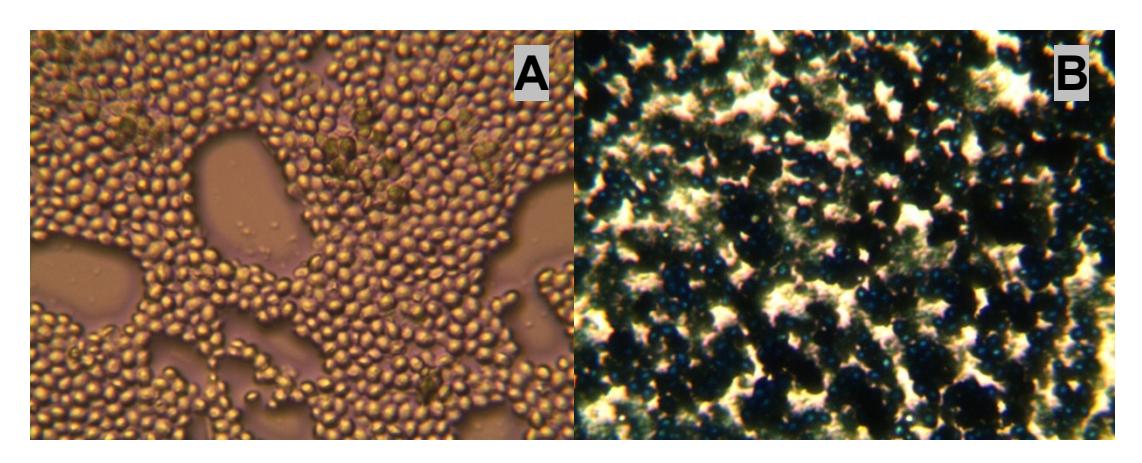
In this research work yeast (Saccharomyces cerecisiae) cells were modified with iron salts, thus, under the action of oxidoreductases, Prussian Blue was formed in a membrane of a yeast cell. After this modification, yeast cells were immobilized on glass/FTO electrode surface by using glutaraldehyde. Further, modified and unmodified yeast cells were photographed using an optical microscope (Fig. 1). Moreover, a difference in electric conductivity of modified and unmodified yeast cells was observed in ferri/ferro system, by using cyclic voltammetry.