The anthocyanins and essential oils are derived from plants and are denoted by antioxidant, antibacterial, anti-cancer and anti-inflammatory properties. They are widely used in cosmetics, pharmaceuticals and food industry because of their active properties. However, anthocyanins are unstable compounds. In order to increase their stability, anthocyanins are immobilized into various carriers which not only protect their molecules from physical and chemical factors, but also maintain their activity [1, 2]. The aim of this work is to encapsulate anthocyanins and cinnamaldehyde in hydrophobically modified starch by using spray drying method.
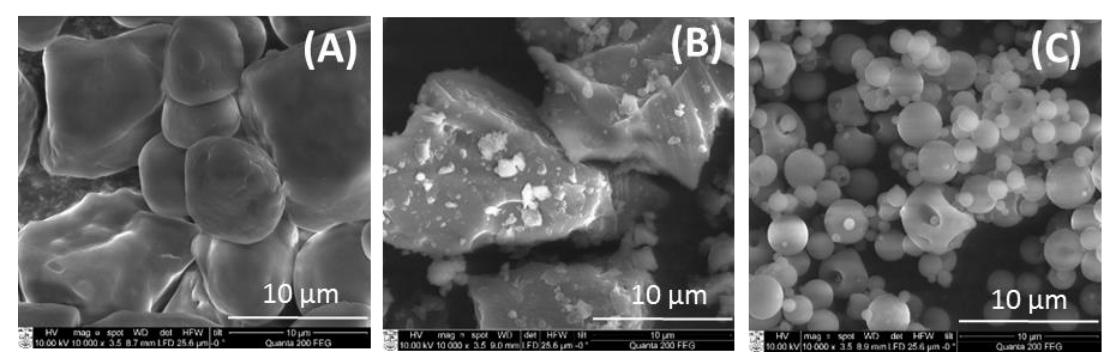
In this study anthocyanins (AC) from bilberry extract (Vaccinium myrtillus L.) and cinnamaldehyde (CA) were encapsulated in starch octenylsuccinate (OSAS) by using spray drying method. Firstly, aqueous emulsion containing 20 % of starch octenylsuccinate, 0.05 % anthocyanins and 5 % cinnamaldehyde was prepared. The droplet size of emulsion (271±5 nm) was measured and antioxidant activity (78±4 %) was determined. The dry capsules of starch octenylsuccinate with entrapped active compounds were obtained by spray drying the emulsion with Nano Spray Dryer B-90 (Buchi). The obtained OSAS-AC-CA capsules (Fig. 1 C) were characterized by using scanning electron microscopy (SEM) and Fourier transform infrared spectroscopy studies.
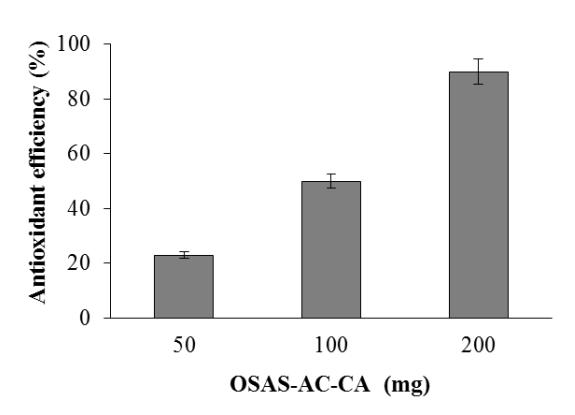
The tablets containing various amounts of OSAS-AC-CA capsules and microcrystalline cellulose were prepared and their antioxidant activity was examined (Fig. 2). The antioxidant efficiency varied from 23±1 to 90±5 % depending on OSAS-AC-CA content in the tablet. Consequently, OSAS-AC-CA capsules could be potentially used as antioxidant component in food supplements.