In the worldwide fight against bacterial resistance, there is a need for a novel family of antimicrobial drugs. Antimicrobial peptides (AMPs) are promising candidates to replace antibiotics. Still, the majority of them have an unclear mechanism of action. Atomic force microscopy (AFM) is a surface-sensitive technique and aims to study the physical properties of living biological cells under physiologically relevant conditions without the destruction of the sample. However, the studies involving live bacteria limits the necessity to attach a specimen to the substrate. Therefore, the existing protocol needs to be adapted. Here we present a protocol to immobilize Gram-positive bacterial cell membranes.
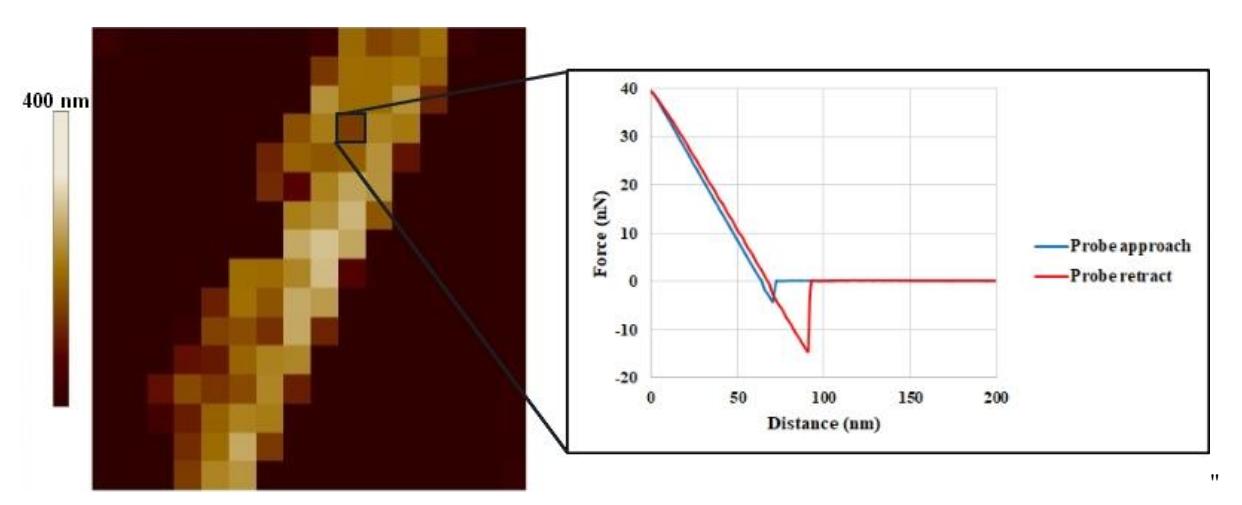
This study focuses on the antimicrobial effect of heat-labile Geobacillin 26 peptide against Gram-positive bacteria. The bacteria are attached to the substrate via crosslinking with glutaraldehyde. Time-resolved AFM images revealed no changes in the topography of the affected cell wall. This result is in line with recent studies, Geobacillin 26 was named as not a cell wall degrading enzyme [1]. However, the differences in cell volume of affected bacteria from a control group showed the leakage of inside fluids. That indicates the loss of membrane integrity. But the mode of action of Geobacilin 26 remains unclear. For this purpose, before and after the impact of Geobacillin 26, bacteria were evaluated by force spectroscopy (Fig.1). The technique where subtle changes in cell wall elasticity are detected.