Soil acidity has been and continues to be among the biggest problems for farmers worldwide. With approximately one third of soils in the world [1] and over 20% in Lithuania already being acidic, as well as with increasing global usage of nitrogen fertilizer [2], the problem is expected to be even more accentuated in the future. Urgent solutions are necessary, and along with soil engineering and the creation of responsible fertilization systems, plant genetic engineering and targeted selection appear to be possible answers.
The main issue caused by soil acidity, along with imbalance in micro and macro elements, is the toxicity caused by free Al3+ ions. Upon entering roots, aluminum ions can cause permanent damage to cellular functions and in turn hamper the growth of plant roots, thus lowering its survivability. One of the most aluminum-susceptible major crop is barley (Hordeum vulgare L.). In this analysis we compare local Lithuanian barley cultivars with international standards, in an attempt to find the most aluminum-resistant genotypes and identify genetic and molecular mechanisms behind this resistance.
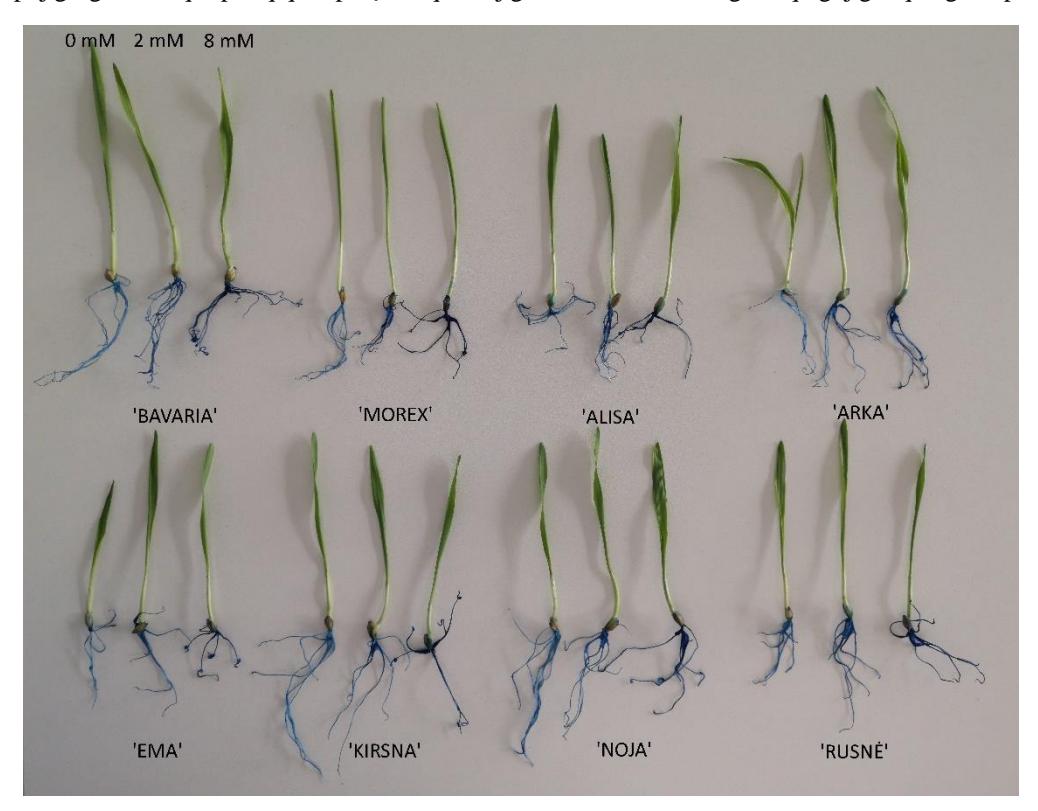
To determine barley varieties best suited to acidic environments a host of morphological, biochemical and genetic analyses was employed. Throughout the early seedling growth period in Al stress environments we observed the changing morphology, then, afterwards we measured chemical changes in various plant tissues. Finally, we explored the genetic basis for aluminum toxicity resistance or lack thereof.
Our results show an observable morphological change in aluminum stress groups. From biochemical perspective, Evans blue and Hematoxyline staining assays appeared to be the most indicative of changes induced by Al3+ toxicity. Further analyses will incorporate genetic findings, which we hope to correlate with data found in lab experiments as well as obtained in the field. According to our analysis so far, the cultivar 'Ema' appears to be the most resistant.